

Table of Contents
- Why Checking Clothing Sizing Matters Before You Buy
- How to Measure Chest, Waist, and Inseam Accurately
- Understanding Garment Measurements vs Body Measurements
- How to Read and Use Size Charts Correctly
- Finding True to Size Christian Apparel That Fits
- Measuring Existing Clothes to Compare Fit
- Why Sizing Varies by Brand and How to Account for It
- Tips for Online Shopping Success and Avoiding Returns
- Frequently Asked Questions
Last Updated: September 3, 2026
Why Checking Clothing Sizing Matters Before You Buy
Getting the fit right is the difference between a shirt you'll wear constantly and one that sits unworn in your closet. The problem isn't that sizing is complicated, it's that it's inconsistent. Two brands labeling their shirts as "Large" might fit completely differently due to variations in fabric type, garment construction, and stretch.
At Dark Times Rebellion, we understand this frustration. We offer premium heavyweight apparel, and we know that checking clothing sizing carefully before purchase prevents disappointment and returns. This guide walks you through exactly how to measure your body accurately, read size charts correctly, and account for the variables that make sizing vary between brands.

How to Measure Chest, Waist, and Inseam Accurately
Accurate body measurements are the foundation of finding clothes that fit. The three primary measurements you need are chest, waist, and inseam.
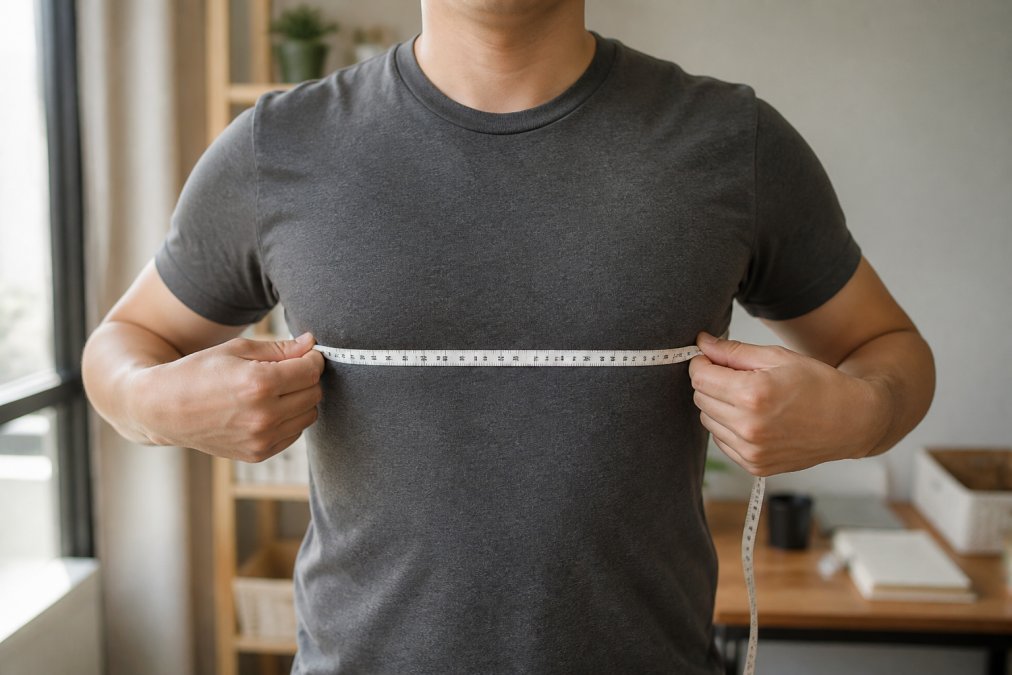
Measuring Your Chest
Your chest measurement determines how a shirt will fit across your shoulders, torso, and arms. Wrap a measuring tape around the fullest part of your chest, keeping the tape parallel to the ground. The tape should be snug but not tight, you should be able to fit one finger underneath it comfortably. Wear a fitted shirt or measure against your skin, and stand naturally without puffing out your chest or hunching inward. Record the measurement in inches. If you're between sizes, round up rather than down; a shirt that's slightly loose fits better than one that's too tight.
Measuring Your Waist
Waist measurement determines how a shirt sits at your midsection and how pants will fit. Find the narrowest part of your torso, typically just above your hip bones and below your rib cage. Wrap the measuring tape around this point, keeping it parallel to the ground. The tape should be snug but not compressed. Breathe normally while measuring, don't hold your breath or suck in your stomach, as this skews the measurement.
Measuring Your Inseam
Inseam length determines how pants will drape and where the hem will naturally fall. Stand barefoot against a wall with your feet about six inches apart. Have someone place a measuring tape at your crotch and measure straight down the inside of your leg to your ankle bone. If measuring alone, place a book horizontally between your legs at crotch height against a wall, then measure from the top of that book down to your ankle bone.
Understanding Garment Measurements vs Body Measurements
Your body measurements and garment measurements are not the same thing. When you measure your chest at 38 inches, you're measuring your body. When a size chart says a shirt's chest width is 22 inches, that's the flat measurement of the garment laid out.
Garments are designed with ease, extra room built in so you can move, breathe, and sit comfortably. Most casual t-shirts add 2-4 inches of ease to the chest measurement. A relaxed-fit shirt might add 4-6 inches. An athletic or slim-fit shirt might add only 1-2 inches.
To find your garment size, take your body measurement and add the appropriate ease. If your chest measures 38 inches and you want a relaxed fit with 4 inches of ease, you're looking for a garment with a chest width of approximately 42 inches. Different brands approach ease differently, which is why a size chart is essential, it tells you the actual garment dimensions, not the body dimensions the size is "meant for."
How to Read and Use Size Charts Correctly
A proper size chart lists the actual garment dimensions for each size. The most important columns are chest width (or circumference), length, and sleeve length.
When you're looking at a size chart, find the row that matches your size, then look at the chest width measurement. This is the flat measurement of the shirt from armpit to armpit, doubled. Compare this number to your body measurement plus your desired ease. If your chest is 40 inches and you want a relaxed fit (4 inches of ease), you're looking for a garment with a 44-inch chest width. Check the length measurement next to ensure the shirt will hang at your preferred point, and verify sleeve length matches your arm proportions.

Size |
Chest Width (inches) |
Length (inches) |
Sleeve Length (inches) |
|---|---|---|---|
S |
19 |
27 |
8 |
M |
21 |
28.5 |
8.75 |
L |
23 |
29 ⅜ |
9.5 |
XL |
25 |
31.5 |
10.25 |
This table shows how measurements scale across sizes. Each size up adds roughly 2 inches to chest width and 1-1.5 inches to length. Understanding this pattern helps you predict how a size you haven't tried will fit.
Finding True to Size Christian Apparel That Fits
When you're looking for Christian apparel that actually fits well, consistency matters. Brands that take sizing seriously provide detailed charts and maintain consistent measurements across their line. Dark Times Rebellion offers premium heavyweight t-shirts, for example, with consistent ease across all sizes, so a Medium from one style fits the same as a Medium from another.
True to size means the garment measurements match what the size name suggests. The best way to verify if a brand is true to size is to check customer reviews. When checking clothing sizing for Christian apparel specifically, pay attention to how design elements and fabric weight affect fit. Heavyweight cotton (like Dark Times Rebellion's 6.1 oz/yd² fabric) drapes differently than lighter options, which can affect how the garment feels on your body even if the measurements are identical.
Measuring Existing Clothes to Compare Fit
One of the most practical sizing strategies is measuring clothes you already own and love. Lay a well-fitting t-shirt flat on a table and measure across the chest from armpit to armpit, then double that number to get the full chest width. Measure the length from the shoulder seam down to the hem and the sleeve from the shoulder seam to the cuff.
Now you have a reference point. When considering a new shirt from any brand, compare those measurements to the garment's size chart. This approach works especially well when trying a new brand for the first time, you're comparing actual measurements rather than relying on size names.
Keep in mind that fabric type affects how a garment drapes and feels, even with identical measurements. A heavyweight cotton shirt will have more structure and less stretch than a lightweight jersey.
Why Sizing Varies by Brand and How to Account for It
Sizing inconsistency exists because different brands have different target markets, production facilities, and design philosophies. A brand targeting athletic wear designs for stretch and movement, so their ease is minimal. A brand targeting casual streetwear adds more ease for a relaxed silhouette.
Vanity sizing, where brands intentionally label sizes smaller than they actually measure, adds another layer of inconsistency. The way to account for this is simple: stop relying on size names and start relying on measurements. When you know your measurements and you know the garment's measurements, size names become irrelevant.
Fabric composition also drives sizing variation. A shirt made from 100% cotton shrinks differently than one made from a cotton-poly blend. A garment-dyed shirt might fit slightly differently than a yarn-dyed shirt due to how the dye process affects the fabric.
Tips for Online Shopping Success and Avoiding Returns
Online shopping for clothing requires strategy. Start by measuring yourself accurately and write down your chest, waist, and inseam measurements. Before adding anything to your cart, check the size chart and compare the garment's measurements to your measurements plus your desired ease.
Read customer reviews specifically for fit feedback. Look for comments like "runs large" or "true to size." If multiple customers mention fit issues, that's data. If customers consistently report that sizes fit as expected, that's a green light.
Consider the return policy. When an item arrives, try it on immediately and initiate a return right away if it doesn't fit. Remember that fit is subjective, what matters is that the garment's measurements match the size chart.
Getting the right fit starts with understanding your own measurements and then matching them to garment dimensions rather than size names. When you check clothing sizing carefully before purchase, you eliminate the guesswork and dramatically reduce returns. Dark Times Rebellion makes this easier by providing detailed size charts and maintaining consistent measurements across our premium Christian apparel line. The National Retail Federation reports that fit issues remain the leading cause of online apparel returns, which is why brands that prioritize sizing accuracy stand out. Take the time to measure, check the chart, and read customer feedback. Your wardrobe, and your wallet, will thank you. Enter the Rebellion and wear apparel that fits you perfectly while expressing your faith with purpose.

Frequently Asked Questions
How do I know if I'm a size 8 or 10?
Compare your actual body measurements—waist circumference, hip measurement, and chest width—to the brand's size chart. A size 8 typically fits a 28-29 inch waist, while size 10 runs 30-31 inches. However, vanity sizing means brands label generously, so always measure your body first, then cross-reference the specific brand's garment measurements, not their labeled sizes. Dark Times Rebellion's heavyweight tees use consistent sizing across all sizes, so measure your chest and compare it to the width listed on the product page.
Why do clothing sizes vary so much between brands?
Vanity sizing—intentionally labeling garments smaller than their actual measurements—differs by brand and has shifted over decades. A medium from one brand may fit like a large from another. Additionally, different manufacturers use different fabric blends, construction methods, and fit philosophies. Stretch percentage in fabric also changes how a garment fits on your body versus its flat measurements. The only reliable way to find true-to-size apparel is to compare your body dimensions directly to each brand's garment measurements, not their size labels.
How do I measure my chest for a shirt?
Wrap a measuring tape around the fullest part of your chest, keeping it parallel to the ground and snug but not tight. Stand naturally with your arms at your sides. For accuracy, wear a fitted shirt or no shirt at all—thick layers add inches. Round to the nearest half-inch. Then compare this measurement to the brand's size chart under the 'width' or 'chest' column. Dark Times Rebellion's Premium T-Shirts list width measurements for each size, so you can match your chest measurement directly to the garment that fits.
What's the difference between my body measurements and garment measurements?
Body measurements are your actual dimensions—chest circumference, waist circumference, inseam length. Garment measurements are the flat dimensions of the finished clothing item, including intentional ease (extra room for comfort and movement). A garment with 2-4 inches of ease will measure larger than your body. For example, if your chest is 38 inches, a shirt designed with 2 inches of ease will have a 40-inch chest width. Always compare your body measurement to the garment's measurement, accounting for the fit style: relaxed fit adds more ease than a slim fit.