

Last Updated: October 22, 2026
Quick Summary
To start a Christian clothing line, define your brand vision and faith-based mission, identify your target audience, choose starter products like t-shirts, create original designs that respect scripture, and select between print-on-demand or wholesale manufacturing based on your budget and quality standards.
- Start with 3-5 designs maximum, focusing on t-shirts as your core product for affordability and ease of production.
- Print-on-demand costs $2,000-7,000 to launch, while wholesale manufacturing requires $5,500-16,500 including initial inventory.
- Research and request samples from at least 3 suppliers before committing to bulk orders to ensure quality and reliability.
- Market through social media, church partnerships, Christian influencers, and email to reach believers in faith communities.
- Document your original design process with sketches and dates to prove copyright ownership and protect your brand legally.
Table of Contents
- Define Your Brand Vision and Faith-Based Mission
- Identify Your Target Audience and Brand Positioning
- Choose Your Christian Clothing Products and Starter Collection
- Create Original, Respectful Designs and Handle Copyright and Trademark
- Compare Print-on-Demand Christian Clothing vs. Wholesale Manufacturing
- Cons of print-on-demand:
- Pros of wholesale manufacturing:
- Cons of wholesale manufacturing:
- Research Suppliers and Request Product Samples
- Plan Your Christian Apparel Business Startup Costs and Launch Timeline
- Build Your Christian Clothing Brand Marketing Strategy
- Frequently Asked Questions
Define Your Brand Vision and Faith-Based Mission
Your brand vision answers one question: why does your Christian clothing line exist?
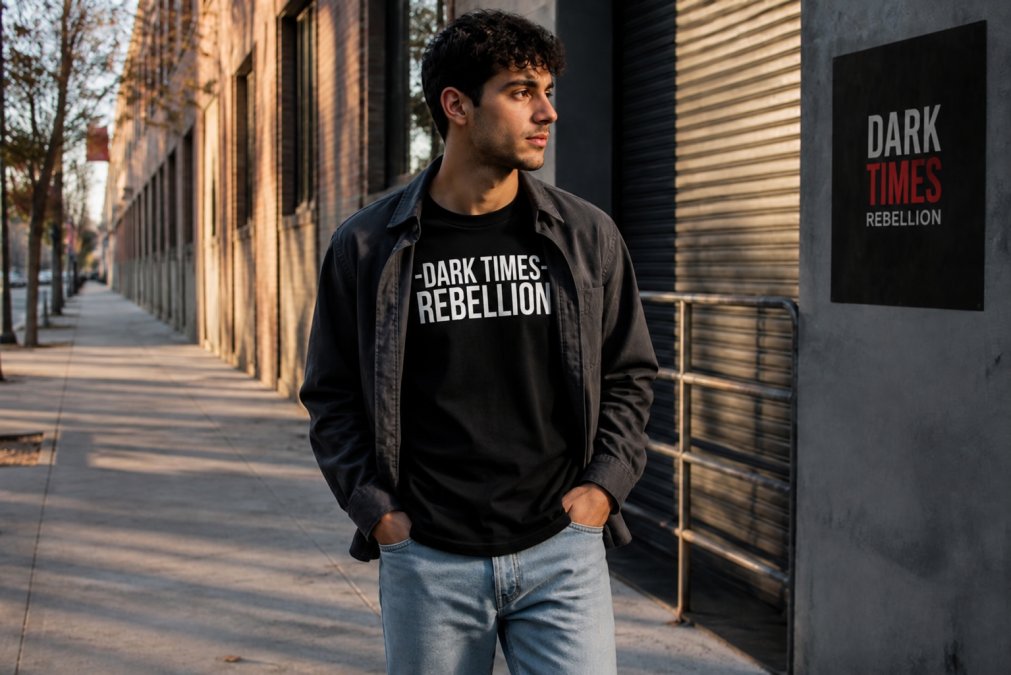
At Dark Times Rebellion, we believe a clothing brand must stand for something real.
Write down what you believe: what your faith means to you, what you're called to stand for, and how that translates into clothing.
Your mission explains how you'll live out that vision. Dark Times Rebellion's mission is to help believers stand firm against darkness, and it drives our product choices, design decisions, and customer communication.
Consider these questions as you build yours:
- What spiritual truth do you want to communicate?
- Who are you speaking to, and what do they need to hear?
- What sets your faith perspective apart from other Christian brands?
- How will your clothing help customers express their commitment to Christ?
Your vision and mission should feel bold and purposeful.
Write this down. Refine it. Test it with people in your faith community. This clarity will guide every decision you make as you start a Christian clothing line.
Identify Your Target Audience and Brand Positioning
Who are you making clothes for? You cannot build a successful Christian clothing line without a clear target audience.
Too many new brands try to appeal to everyone, and that approach fails. Know exactly who you're speaking to, what they believe, and what they're struggling with.
Dark Times Rebellion targets believers serious about their faith, not casual Christians, but people who see faith as a daily battle and refuse to compromise.
Define your audience by answering these questions:
- What age range are they?
- What's their income level?
- Are they new believers or mature Christians?
- What struggles do they face in living out their faith?
- What other brands do they buy from?
- How do they talk about their faith, bold and public, or quieter and personal?
Your positioning is how you want your brand seen next to other Christian apparel: premium or affordable, subtle or bold, trendy or timeless, casual or formal?
Your positioning should answer: "We are the [type] Christian clothing brand for [specific audience] who [specific need]." This clarity helps you make consistent decisions about design, pricing, production, and marketing.
Choose Your Christian Clothing Products and Starter Collection
When you start a Christian clothing line, you don't need to make everything. Start small. Choose products you can execute well.
Most new Christian apparel brands begin with t-shirts: affordable to produce, easy to design, and familiar to customers. Add hoodies, hats, or other items later, for now, get t-shirts right.
Your starter collection should include 3-5 designs maximum. Each design should communicate something different about your faith perspective. Dark Times Rebellion launched with designs that speak to spiritual warfare, standing firm in faith, and coming to Christ as you are. Each design serves a different moment in a believer's life.
Consider these product categories as you build your collection:
- Premium t-shirts: Heavyweight, durable, built for daily wear
- Hoodies: Popular for casual wear and layering
- Long-sleeve shirts: Work in different seasons
- Hats or beanies: Lower price point, good for new customers
- Accessories: Socks, bags, or other items (optional for launch)
Choose products that align with your mission. If your brand is about bold faith expression, make sure your products feel intentional and high-quality. Cheap, thin apparel undermines your message. Customers expect Christian clothing to reflect the seriousness of the faith it represents.
Create Original, Respectful Designs and Handle Copyright and Trademark
Your designs are your brand. They must be original, respectful, and legally protected.
Create designs that reflect your brand vision. What visual language represents your faith perspective? Use images, typography, and color authentic to your mission.
Never copy designs from other brands or artists. Create original work or hire a designer, original designs protect you legally and give your brand a unique identity.
Respect scripture and faith imagery. Don't treat Bible verses as decoration; if you use scripture, make sure the design honors what the verse actually says. Your audience will notice faith used for profit rather than purpose.
Understand copyright and trademark for your designs:
- Copyright: Your original designs are automatically copyrighted when you create them. Document your design process (sketches, dates, drafts) to prove you created it.
- Trademark: If you want to protect your brand name or logo, file for trademark registration with the U.S. Patent and Trademark Office.
- Scripture licensing: If you use specific Bible translations, check if you need permission.
If you lack design skills, hire a designer.
Compare Print-on-Demand Christian Clothing vs. Wholesale Manufacturing
How will you produce your Christian apparel? You have two main options: print-on-demand or wholesale manufacturing. Each has different costs, quality levels, and commitment levels.
Print-on-demand means you partner with a service that prints designs on blank apparel when customers order. You pay per shirt. No upfront inventory. No minimum orders.
Pros of print-on-demand:
Martyr Heavyweight Christian Warrior T-Shirt - Black →
- Zero upfront costs
- No inventory risk
- Easy to test designs
- Quick to launch
Cons of print-on-demand:
- Quality varies by service
- Less control over materials
- Customers notice the print quality
Wholesale manufacturing means you order bulk quantities from a manufacturer. You pay upfront for hundreds or thousands of shirts. You own the inventory.
Pros of wholesale manufacturing:
- Better quality control
- Premium materials available
- Stronger brand identity
Cons of wholesale manufacturing:
- Inventory risk if items don't sell
- Longer production timelines
- Requires more business planning
Dark Times Rebellion uses premium wholesale manufacturing, sourcing blanks from quality suppliers so our shirts are heavyweight, durable, and built to last.
For your first launch, consider your budget and risk tolerance. Print-on-demand is safer for testing. Wholesale manufacturing is better if you're confident in your designs and have capital to invest.
Research Suppliers and Request Product Samples
If you choose wholesale manufacturing, finding the right supplier affects your product quality, costs, and timeline.
Research blank apparel suppliers, the companies that manufacture the base shirts you'll print or embroider on. Look for suppliers offering:
- Premium materials (100% cotton or quality blends)
- Heavyweight fabric (6+ oz weight for durability)
- Ethical manufacturing practices
- Reasonable minimum orders for new brands
Find suppliers through these channels:
- Google search: "wholesale blank t-shirt suppliers"
- Industry directories: Alibaba, Global Sources, or TradeKey
- Trade shows: Attend apparel industry events
- Referrals: Ask other Christian apparel brands (non-competitors) who they use
- Direct outreach: Email manufacturers with your brand vision and ask if they work with new brands
Request samples from at least 3 suppliers. Ask for samples in your target sizes and colors. Evaluate each sample for:
- Fabric quality and weight
- Stitching and durability
- Fit and sizing accuracy
- Color consistency
- Overall feel and premium quality
Dark Times Rebellion sources from suppliers who understand our commitment to quality, testing samples thoroughly before bulk orders so every shirt reflects our brand promise.
Compare suppliers on more than just price. A supplier 10% cheaper might deliver inferior quality or miss deadlines. Long-term reliability matters more than short-term savings.
Plan Your Christian Apparel Business Startup Costs and Launch Timeline
Before you launch, understand your startup costs and timeline to stay realistic and prepared.
Startup costs vary based on your production model. Here's what to budget:
Print-on-demand model:
- Website and e-commerce setup: $500-2,000
- Design creation: $500-2,000
- Initial marketing: $1,000-3,000
- Total: $2,000-7,000
Wholesale manufacturing model:
- Website and e-commerce: $500-2,000
- Design creation: $500-2,000
- Initial inventory (500-1,000 units): $3,000-8,000
- Business registration and insurance: $500-1,500
- Initial marketing: $1,000-3,000
- Total: $5,500-16,500
These are starting points. Your actual costs depend on design complexity, inventory quantity, and marketing strategy.
Plan your launch timeline:
- Weeks 1-2: Define your brand vision and audience
- Weeks 3-4: Create designs or hire a designer
- Weeks 5-6: Research suppliers and request samples (if wholesale)
- Weeks 7-8: Set up website and e-commerce platform
- Weeks 9-10: Prepare inventory or print-on-demand setup
- Weeks 11-12: Test everything and plan launch marketing
- Week 13: Soft launch to small audience
- Week 14: Full launch with marketing push
This timeline assumes you're working part-time. Full-time work compresses it to 8-10 weeks. Wholesale manufacturing adds 2-4 weeks for production.
Start with realistic expectations. Your first month won't generate significant revenue.
Build Your Christian Clothing Brand Marketing Strategy
Launching a Christian clothing line is only half the battle. Marketing determines whether people actually know you exist.
Reach your target audience where they already are: churches, online faith communities, social media groups, and podcasts.
Start with these channels:
- Social media: Instagram and TikTok are where younger Christians spend time. Post content showing your designs, behind-the-scenes brand story, and faith messages that align with your mission.
- Church partnerships: Partner with local churches to share your brand with their communities. Offer discounts for church groups.
- Christian influencers: Reach out to faith-based influencers and content creators. Send them free samples and ask them to share your brand authentically.
- Email marketing: Build an email list from day one. Send regular updates about new designs, behind-the-scenes stories, and faith-focused content.
- Content marketing: Create blog posts or videos about your brand story, why you started, and how your faith shapes your designs.
Dark Times Rebellion markets by telling our story, why we exist, what we believe, and who we're called to serve.
Measure what works: track which channels drive traffic and sales, double down on winners, and cut the rest. Most new brands discover their best channel by testing multiple approaches.
Marketing is how you grow from zero to customers.
Starting a Christian clothing line requires clarity on your mission, understanding your audience, intentional product choices, and a commitment to quality, plus legal awareness around design rights and honest marketing that reflects your faith.
The Christian apparel market is growing because believers want to express their faith through what they wear. At Dark Times Rebellion, we've built our brand on the belief that Christian clothing should be bold, durable, and purposeful. Enter the Rebellion and join believers who refuse to hide their commitment to Christ.

Frequently Asked Questions
How much money do I need to start a Christian clothing line?
Startup costs vary by production model. Print-on-demand requires minimal upfront investment, but offers lower profit margins. Wholesale manufacturing demands investment for minimum order quantities, samples, and inventory. Budget for business registration, domain and e-commerce platform, and initial marketing.
Do I need an LLC to start a Christian clothing line?
While not legally required to start, forming an LLC protects your personal assets if the business faces liability claims. It also builds credibility with suppliers and customers. LLC formation costs vary depending on your state, plus annual filing fees. Consult a business attorney to determine if an LLC makes sense for your specific situation and risk tolerance.
How do I find a manufacturer for a Christian clothing line?
Research wholesale suppliers through industry directories, trade shows, and referrals from other Christian clothing brand owners. Vet suppliers by reviewing their certifications, requesting references, and examining product samples. Request quotes for your minimum order quantity and lead times. Verify they can handle your design specifications and timeline. Most reliable manufacturers provide detailed sample evaluations and are transparent about pricing and production capacity.
What makes a Christian clothing brand different from generic apparel?
A strong Christian clothing brand combines authentic faith messaging with quality craftsmanship. Brands like Dark Times Rebellion differentiate through heavyweight premium materials, purpose-driven design that reflects genuine conviction, and transparent brand storytelling rooted in Scripture. The key is avoiding generic religious clichés, instead, create designs that resonate with believers seeking bold, wearable expressions of their faith without appearing preachy or superficial.