

Table of Contents
- The Real Cost of Cheap Faith Apparel
- Fabric Weight, Stitching, and What You Actually Pay For
- How to Style Christian Streetwear Without Looking Preachy
- Best Christian Clothing Brands and What Separates Them
- The Theological Case Against Treating Faith as a Trend
- Care Instructions That Double the Life of Your Shirt
- Verdict: Who Should Buy Christian Streetwear and Who Shouldn't
- Frequently Asked Questions
Last Updated: September 16, 2026
The Real Cost of Cheap Faith Apparel
Spending $30 on a shirt that fades, cracks, and loses its shape after three washes is not a bargain. It is a rental fee on disappointment. That is the honest starting point for anyone asking whether christian streetwear is worth it.
At Dark Times Rebellion, we build heavyweight, garment-dyed pieces for believers who want their clothing to hold up as long as their convictions do. But durability is only half the question. The other half is whether message-driven clothing does anything real.

A common mistake is judging faith-based apparel on the graphic alone. The print is the cheapest part of the garment. What you actually pay for is fabric weight, stitching, and whether the brand treats your faith as a message or a marketing hook.
The real cost of cheap faith apparel shows up later: replacement purchases, shirts you stop wearing, and a message that never gets a chance to start a conversation because the garment fell apart first. Below, we break down what separates a wardrobe staple from a disposable trend piece.
Fabric Weight, Stitching, and What You Actually Pay For
Fabric weight is the single best predictor of how a shirt will age. Most budget graphic tees sit in the 4.0 to 4.5 oz/yd² range, which is thin enough to feel flimsy and prone to stretching at the collar.
Heavier cotton holds its structure, resists transparency, and keeps its shape through repeated washing.
Three construction details matter more than the design:
- Fabric weight: Heavier cotton drapes better and survives more wash cycles
- Collar stitching: Double-needle topstitching prevents the stretched, wavy neckline that ruins cheap tees
- Shoulder and hem reinforcement: Twill-taped neck and shoulders plus double-needle hems stop seams from pulling apart
Why 6.1 oz Cotton Changes the Math
A 6.1 oz/yd² ring-spun cotton shirt costs more upfront, but the math flips over time. A lightweight tee that fades or tears in a few months gets replaced, and that replacement cost stacks up fast.
How to Style Christian Streetwear Without Looking Preachy
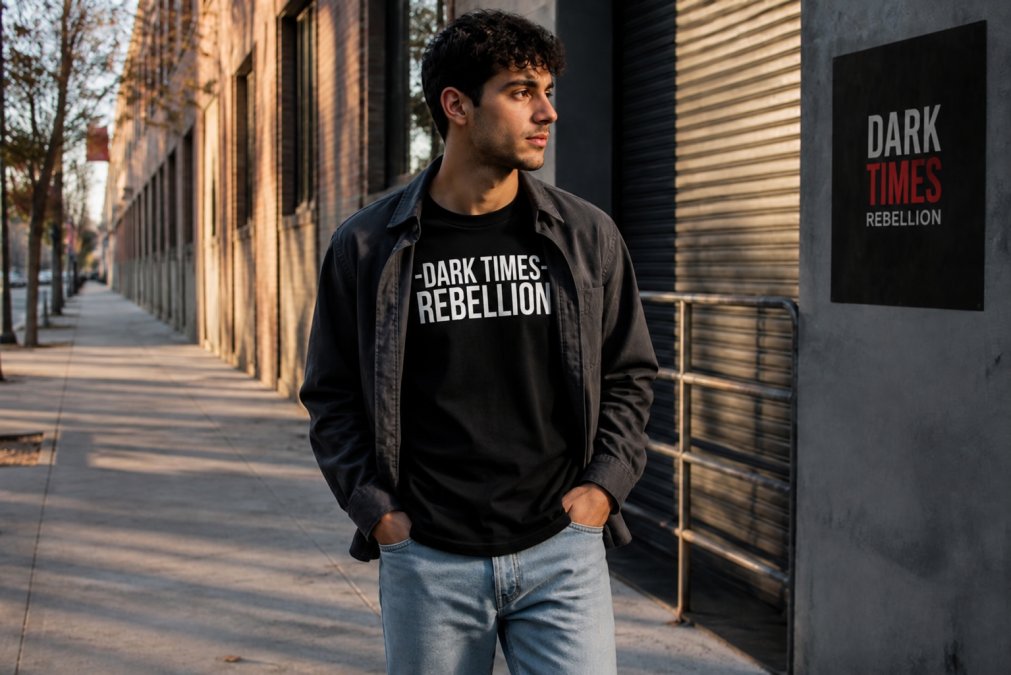
The trick to styling christian streetwear is treating the shirt as a normal wardrobe piece, not a costume. Graphic tees, hoodies, and tanks layer into everyday outfits the same way any streetwear staple does. What separates a styled outfit from a preachy one is almost never the graphic itself, it is the fit, the proportion, and the context you wear it in.
Styling by Demographic and Setting
Most guides treat "christian streetwear" as one audience. It is not. The same heavyweight tee reads differently on a college student, a parent at a school event, and a professional in a casual office. Here is how to adjust.
Layering for Warm and Cold Climates
Layering solves the year-round wearability problem. In warmer months, a mid-weight tank or a single heavyweight tee works on its own. In colder weather, a hoodie becomes the base layer under a jacket.
Best Christian Clothing Brands and What Separates Them
The best christian clothing brands share three traits: honest material specs, construction built for repeat wear, and a message that reflects genuine conviction rather than a trend cycle. Most roundups stop there. The brands that actually earn repeat customers go further and answer a harder question: where and how was this made?
What to Check |
Weak Signal |
Strong Signal |
|---|---|---|
Fabric weight |
Not listed |
Stated in oz/yd² |
Collar build |
Single stitching |
Double-needle topstitch |
Shoulder seams |
Plain |
Twill-taped |
Design intent |
Trend-chasing slogan |
Scripture-based, wearable message |
Sizing range |
S to XL only |
Extended sizes with real measurements |
Manufacturing disclosure |
None |
Named facilities or published supplier standards |
Fabric sourcing |
Unstated |
Traceable cotton or recycled content |
The Supply Chain Question Most Brand Roundups Skip
A faith-based brand that preaches stewardship but cannot say where its cotton comes from is telling you something. The ethical-manufacturing angle is the biggest blind spot in this category, and it is worth applying the same scrutiny you would apply to any other purchase.
Ask three questions before you buy:
- Where is the fabric sourced? Traceable cotton programs and recycled-content fabrics are increasingly common and are usually disclosed on a product page or an about page. If a brand cannot name its mill or its fiber program, treat that as an open question, not a disqualifier.
- Who made the garment, and under what conditions? Fair-wage commitments and named partner facilities are the strongest signals. Vague language like "ethically made" without any supporting detail is a marketing phrase, not a standard.
- What happens at end of life? Brands that offer repair, take-back, or recycling programs are treating the garment as a long-term object rather than a disposable one. That aligns with the stewardship message most of these brands claim to hold.
Price Versus Value, Revisited
A $45 heavyweight tee and a $20 thin tee are not the same product at different markups. The $45 shirt typically carries more cotton per square yard, better stitching, and a longer usable life. When you divide cost by the number of wears before the garment fails, the heavier shirt usually wins, and it wins by a wider margin if the brand also stands behind its construction.
The Theological Case Against Treating Faith as a Trend
Faith is not an aesthetic, and treating it as one is the strongest argument against chasing faith-based fashion trends. When a brand sells belief as a seasonal look, the message becomes merchandise.
Care Instructions That Double the Life of Your Shirt
Washing a graphic tee inside out in cold water and drying it on low is the single biggest factor in apparel longevity. Heat is what kills prints and shrinks cotton.
A simple care routine:
- Turn the garment inside out before washing
- Wash cold on a gentle cycle with similar colors
- Skip fabric softener, which coats fibers and dulls prints
- Tumble dry low or hang dry
- Never iron directly over the graphic
Verdict: Who Should Buy Christian Streetwear and Who Shouldn't
Christian streetwear is worth it if you want durable, wearable clothing that carries a biblical message you actually believe. It is not worth it if you are looking for a cheap slogan tee or a trend piece.
Buy it if you:
- Want heavyweight apparel that survives regular wear
- Value a conversation starter over a loud statement
- Care about garment construction and honest material specs
- Want one wardrobe staple instead of three replacements
Skip it if you:
- Only want the lowest possible price per shirt
- Prefer faith expressed privately, not on clothing
- Do not care about fabric weight or stitching
Frequently Asked Questions
Is Christian streetwear appropriate for church?
It depends on your congregation's culture. A heavyweight graphic tee with a subtle faith message works for casual services, youth groups, and small gatherings. For traditional services, layer it under a button-down or jacket. The key is that your clothing does not distract from worship. A $30 garment-dyed tee from a brand like Dark Times Rebellion reads as intentional, not sloppy, which helps it fit most casual church settings.
Does Christian streetwear offer better quality than mainstream brands?
Not automatically. Quality depends on fabric weight, stitching, and construction, not the message on the shirt. Look for specifics: 6.1 oz/yd² ring-spun cotton, double-needle hems, and twill-taped neck and shoulders. Those details appear on premium Christian pieces and hold up better than thin 4 oz fast-fashion tees. A heavier shirt costs more upfront but survives more washes, which lowers your cost per wear over time.
What should I look for when buying faith-based clothing?
Check four things: fabric weight (6 oz or higher for durability), construction details (double-needle stitching, taped seams), fit accuracy (compare the size chart to a shirt you already own), and the brand's actual mission. A brand that talks about its theology and manufacturing process is different from one that slaps a Bible verse on a blank. Ask whether the message matches how the brand operates.
How do you style Christian streetwear for everyday wear?
Treat it like any streetwear staple. A black graphic tee pairs with dark jeans, joggers, or layered under an open flannel. A heavyweight hoodie works over a plain tee with cargo pants. Keep the rest of your outfit neutral so the message stands out without competing. For warmer months, a sleeveless tank or a lighter 5.5 oz tee keeps you comfortable while still wearing your faith visibly.
Is it okay to wear Christian apparel if I am still struggling with my faith?
Yes. Christian apparel is not a reward for perfect faith. Several designs are built specifically for people in the middle of the fight. The "Come As You Are" tee from Dark Times Rebellion exists for exactly that reason: it acknowledges brokenness while pointing toward Christ. Wearing a faith message during a hard season can serve as a personal reminder and an honest conversation starter, not a claim that you have everything figured out.
Faith apparel only earns its keep when the garment lasts as long as the conviction behind it. Dark Times Rebellion builds heavyweight Christian clothing for believers who refuse to hide, with 6.1 oz/yd² ring-spun cotton, double-needle construction, and extended sizing from S through 4XL. Enter the Rebellion and wear your commitment to the Light with apparel made to last.