

Table of Contents
- Why Fabric Choice Matters for Christian Clothing
- Cotton vs Polyester for T-shirts: How the Two Fibers Compare
- Durability and Garment Lifespan: Which Fabric Lasts Longer?
- Organic Cotton vs Conventional Cotton: What the Label Doesn't Tell You
- How to Wash Graphic T-Shirts So Prints and Fabric Last
- How to Prevent Cotton Shirts From Shrinking
- The Best Fabric for Printed T-Shirts: What to Look For
- Environmental Impact and Faith-Aligned Buying
- Frequently Asked Questions
Last Updated: October 9, 2026
Why Fabric Choice Matters for Christian Clothing
Organic cotton vs polyester separates a shirt you reach for every week from one that ends up as a dust rag.
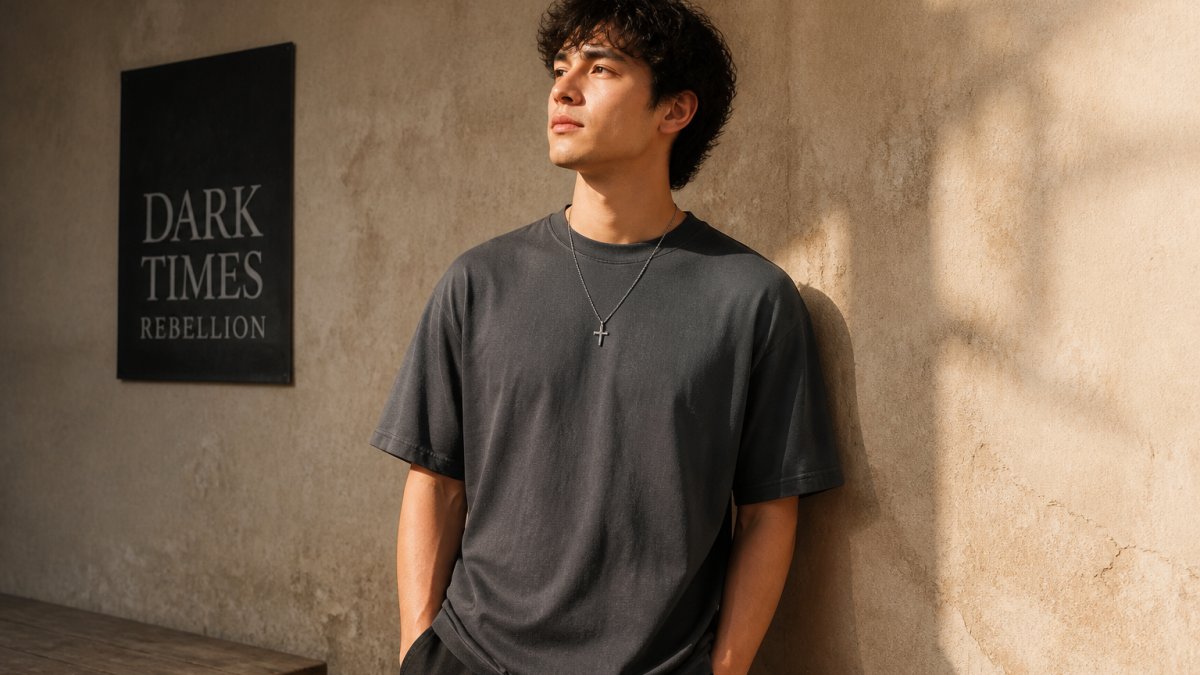
Most shoppers pick a tee by the front graphic, but the fiber decides breathability, comfort, and how the print holds up after fifty washes.
Cotton vs Polyester for T-shirts: How the Two Fibers Compare
Cotton is a natural fiber spun from the seed hairs of the cotton plant. Polyester is a synthetic fiber made from petroleum-based polymers. That single difference drives almost every trade-off that follows.
Cotton feels soft and breathes well but soaks up sweat and dries slowly. Polyester resists wrinkles and dries fast but traps heat and can feel slick.
Softness, Breathability, and Everyday Comfort
For everyday comfort, cotton wins. Its fibers are naturally soft and let air move through the weave, so heat escapes instead of building up. Ring-spun cotton, like the fabric in our Defeat Darkness tee, spins the fibers tighter for an even softer hand feel.

Polyester feels smoother at first touch, but because it does not absorb moisture, sweat sits on the skin and feels clammy during light activity.
- Cotton: soft, breathable, natural feel, ideal for everyday wear
- Polyester: smooth, wrinkle-resistant, but less airflow
- Blends: mix both, but rarely excel at either
Moisture, Drying Speed, and Warm-Weather Wear
Polyester dries faster and wicks sweat away from the body, which is why most activewear uses it. Cotton absorbs moisture and holds it, so a soaked cotton tee stays wet longer.
But for casual, low-sweat wear in hot weather, cotton's breathability often feels better. Polyester only pulls ahead once you are genuinely sweating, for church, work, or a coffee shop, cotton's airflow usually wins.
| Factor | Organic Cotton | Polyester |
|---|---|---|
| Softness | High, natural feel | Smooth, synthetic |
| Breathability | Strong airflow | Limited |
| Moisture handling | Absorbs, slow to dry | Wicks, fast to dry |
| Best for | Everyday wear, hot weather | Activewear, performance |
| Durability | Good, softens over time | Very high |
| Environmental impact | Lower when organic | Higher, fossil-fuel based |
Durability and Garment Lifespan: Which Fabric Lasts Longer?
Polyester outlasts cotton on raw abrasion resistance, resisting stretching, fading, and shrinking far better over many wash cycles. If pure longevity is your only metric, polyester wins.
Cotton's durability depends on construction, not just fiber.
A common mistake is blaming cotton when a cheap tee falls apart. In practice, the stitching fails first.
Organic Cotton vs Conventional Cotton: What the Label Doesn't Tell You
Organic cotton is grown without synthetic pesticides and fertilizers, while conventional cotton relies on them.
Organic farming typically uses less water and avoids the pesticide runoff tied to conventional cotton fields, but costs more to produce, which is why organic tees carry a higher price.
A label that says "cotton" tells you nothing about farming method. If organic sourcing matters, look for the word "organic" on the tag, not just "100% cotton."
How to Wash Graphic T-Shirts So Prints and Fabric Last
Turn graphic tees inside out before washing. This one habit protects the print from rubbing against other garments and keeps colors sharp.
Wash in cold water on a gentle cycle; hot water speeds up fading and shrinkage in cotton.
- Wash inside out, cold water, gentle cycle
- Skip fabric softener and bleach
- Tumble dry low or hang to dry
These steps keep fabric and design intact far longer, the cheapest durability upgrade you can make.
How to Prevent Cotton Shirts From Shrinking
Wash cotton in cold water and dry on low heat to prevent shrinking. Most shrinkage happens in the dryer, where high heat makes cotton fibers contract. For zero shrinkage risk, hang dry; if you must use a dryer, remove the shirt while slightly damp and lay it flat to finish.
Pre-shrunk and garment-dyed cotton shrinks less than untreated fabric. Our garment-dyed tees are dyed after construction, which stabilizes the fit before they reach you.
The Best Fabric for Printed T-Shirts: What to Look For
Christian apparel lives or dies on the print. Verse references, crosses, and lines of type are detail-heavy, so fabric and decoration method have to work together. Here is how the two fibers behave under the four decoration methods you will see on faith-themed shirts.
Screen Printing
Screen printing pushes plastisol ink through a mesh screen and cures it with heat, the most durable method for bold, high-contrast designs like a large cross or a short scripture phrase.
- Cotton: Plastisol ink sits on top of the cotton surface and bonds well. Prints stay sharp through dozens of washes when cured correctly. Ring-spun cotton gives a smoother print surface than open-end cotton, so fine lines and small type hold up better.
- Polyester: Plastisol does not bond as cleanly to polyester, and the heat cure can cause dye migration, the shirt's dye bleeds up into the ink, especially on darker colors. Printers use low-bleed or poly-specific inks to fight this, but the risk is real.
- Blends: A 50/50 or tri-blend can print well, but ink adhesion varies by mill. Ask the printer what they recommend for the specific blank.
Direct-to-Garment (DTG) Printing
DTG works like an inkjet printer for fabric, spraying water-based ink directly onto the garment. It is ideal for full-color, photographic, or highly detailed faith designs, a stained-glass image or portrait-style graphic.
Defeat Darkness - Premium T-Shirt - Grey →
- Cotton: DTG is built for cotton. The water-based ink absorbs into the fiber and produces soft, detailed prints with no hand feel. 100% ring-spun cotton is the standard substrate for a reason.
- Polyester: DTG on polyester is difficult. The ink does not absorb the same way, colors can look muted, and the print may crack or fade faster. Most printers either refuse polyester DTG or require a pretreatment that adds cost and inconsistency.
- Blends: Higher cotton content (60% or more) prints far better than high-polyester blends. Below 50% cotton, expect noticeable quality loss.
Embroidery
Embroidery is common on Christian polos, hats, and heavier tees, and behaves differently from ink.
- Cotton: Stable and forgiving. Cotton holds stitches cleanly and does not pucker as easily, especially on mid-to-heavyweight fabric.
- Polyester: Also embroiders well and is often preferred for performance polos because it resists shrinking around the stitching. The trade-off is that polyester can be more prone to needle holes that do not close.
- Blends: Generally fine, but test on the specific blank. Lightweight blends can distort under dense stitch counts.
Inks and Finishes
Water-based and discharge inks give cotton a soft, vintage look popular for faith apparel. Plastisol gives brighter, more opaque color and lasts longer on cotton but feels heavier. On polyester, water-based inks are harder to cure and discharge inks generally do not work, there is no cotton dye to discharge.
What to Look For Before You Buy
- Ring-spun cotton, 5.5 oz/yd² or heavier. This weight holds a print cleanly, resists see-through, and drapes well without feeling stiff. Thin fabric lets the design distort and wear through faster.
- Double-needle stitching on hems and sleeves. The stitching usually fails before the fabric does.
- Twill-taped neck and shoulders. This keeps the collar from stretching and the shoulders from pulling across the print.
Our Hope is Forged tee checks every box, with a 6.1 oz/yd² ring-spun cotton build and a relaxed fit that keeps the graphic clean and readable.

Why This Matters for Faith Apparel Specifically
Christian designs tend to be text-forward and message-driven, and a cracked or faded verse reference undermines the message. Cotton's compatibility with screen printing and DTG, its ability to hold fine type, and its soft hand feel make it the more reliable substrate for this category. Polyester works for performance pieces and embroidered polos, but for the everyday graphic tee that carries your message, cotton is the safer bet.
Environmental Impact and Faith-Aligned Buying
Fabric choice carries a real environmental cost, and the honest comparison runs across four stages: farming, manufacturing, garment use, and end of life. Most guides stop at the first stage, where the misleading claims live.
Farming: Organic vs Conventional Cotton
Organic cotton is grown without synthetic pesticides or fertilizers, and the fiber is chemically identical to conventional cotton, the difference is the farming system.
The USDA organic standards govern what a shirt must meet to carry the organic label, and the Global Organic Textile Standard covers the processing chain from fiber to finished garment.
Water use is frequently cited here, but the comparison is more nuanced than headlines suggest.
Manufacturing and Fossil-Fuel Dependence
Polyester is a synthetic fiber made from petroleum-based polymers, so its production is tied to fossil-fuel extraction and refining. Producing virgin polyester is energy-intensive, and the fiber does not biodegrade in any meaningful timeframe.
Cotton manufacturing uses energy and water too, and conventional dyeing and finishing can involve heavy chemical inputs. Organic certification addresses some of this, but not all.
Garment Use: The Stage Most Guides Skip
This is where the comparison shifts. Every time a polyester garment is washed, it sheds plastic microfibers too small for most wastewater treatment plants to capture, so they end up in waterways and eventually in sediment and aquatic food chains.
Cotton does not shed plastic. It does shed lint, which is biodegradable and captured by lint filters and treatment systems. That is a real difference, not a marketing one.
End of Life: Recycling and Disposal
Polyester is technically recyclable, but textile-to-textile recycling at scale remains limited. Most polyester clothing is downcycled or sent to landfill, where it persists for a very long time. Cotton, especially untreated and undyed, biodegrades far more readily. Organic cotton's advantage here is modest but real: fewer chemical residues in the fiber mean fewer released as it breaks down.
What Faith-Aligned Buying Actually Looks Like
Scripture speaks repeatedly to stewardship of creation and fair treatment of workers, and those themes frame this decision. They do not dictate a single correct fiber, a believer can make a faithful choice with organic cotton, recycled polyester, or a well-made blend, depending on budget, climate, and use.
What stewardship does support is asking better questions before you buy:
- Sourcing: Is the fiber organic, recycled, or conventional? Can the brand name its suppliers or certifications?
- Labor: Does the brand disclose where garments are cut and sewn, and does it reference third-party labor standards?
- Durability: Will this shirt last years, or will it pill and fade in months? Longer wear is one of the most effective ways to lower a garment's per-wear impact.
This is where faith and fabric meet. A shirt can carry a message and reflect your values at once, and the most faithful choice is usually the one you have thought through rather than grabbed off a rack.
Frequently Asked Questions
Is organic cotton more durable than polyester for graphic T-shirts?
Polyester wins on abrasion resistance alone, but that is not the whole story. Organic cotton fibers are natural and tend to pill or thin over years of washing, while polyester holds its structure longer but can snag and trap odor. For printed Christian clothing, the deciding factor is usually the fabric weight and the print method. A heavyweight 100% ring-spun cotton tee, like Dark Times Rebellion's 6.1 oz/yd² garment-dyed shirts, holds up well across dozens of washes when cared for properly, so durability depends as much on care as on fiber.
Which fabric is more comfortable for everyday Christian clothing?
Most people find cotton more comfortable for daily wear because it feels soft against the skin and lets air move through the fabric. Polyester traps heat and can feel clammy in warm weather, though it wicks sweat faster during intense activity. If your Christian apparel is for church, errands, and casual wear, cotton usually wins on comfort. If you wear it for workouts or long days outdoors in heat, a polyester or cotton-poly blend may feel drier.
How should I wash and dry organic cotton and polyester shirts?
Turn graphic tees inside out and wash cold on a gentle cycle with like colors. Skip fabric softener, which coats fibers and dulls prints. Tumble dry low or hang to dry; high heat is the main cause of shrinkage and print cracking. Polyester dries fast and can handle a low tumble, but it holds onto oils, so use a normal amount of detergent rather than overloading. Following these steps keeps both organic cotton and polyester Christian clothing looking new longer.
Is 100% cotton the same as 100% organic cotton?
No. Both are cotton, but organic cotton is grown without synthetic pesticides and fertilizers and is processed under stricter USDA organic standards. Conventional cotton may use more water and chemical inputs during fiber production. For shoppers comparing organic cotton vs polyester in Christian clothing, the organic label signals a different farming method, not a different fiber. Expect a slightly higher price for organic cotton because of those certification and growing requirements.
The real challenge is not picking a fiber. It is finding apparel that matches your convictions without falling apart. Dark Times Rebellion builds heavyweight, purpose-driven Christian tees from 100% ring-spun cotton, with twill-taped seams, a relaxed fit, and garment-dyed construction made to last. Enter the Rebellion and wear your commitment to the Light with apparel built to stand the test of time.