

Table of Contents
- Why Most Guys Get the Wrong Shirt Size
- How to Measure Chest for Shirt Size
- Shirt Fit Types: Slim, Regular, and Relaxed
- Does Heavyweight Cotton Shrink? What to Know
- Finding True to Size Christian Apparel Online
- Reading Size Charts the Right Way
- Common Sizing Mistakes to Avoid
- Conclusion: Wear Your Size with Confidence
- Frequently Asked Questions
Last Updated: September 9, 2026
Why Most Guys Get the Wrong Shirt Size
The biggest reason men wear ill-fitting shirts isn't a lack of options. It's guessing. Most guys grab a size based on what they wore in high school or what the mannequin had on, and that approach fails because standard sizing varies dramatically between brands and even between cuts within the same brand. Your letter size is a starting point, not a final answer.
Fit is a language of inches, not labels. A "Large" from one manufacturer can measure two inches wider in the chest than a "Large" from another. This guide from Dark Times Rebellion walks you through the exact measurements that matter, how to take them correctly, and what to do when you find true to size christian apparel online so you stop wasting money on shirts you can't wear.

Below, we'll show you exactly how to measure your chest, shoulders, and sleeves, decode the difference between slim, regular, and relaxed cuts, and explain why heavyweight fabrics change the fit equation entirely. But first, here's what most guides get wrong: they tell you to measure a shirt you already own. That works for replacing a favorite, but it does nothing if your current shirts were wrong to begin with. You need body measurements taken properly, then translated against a garment's size chart.
How to Measure Chest for Shirt Size
Your chest measurement is the single most important number for determining shirt size because it anchors everything else on the size chart. To measure it correctly, wrap a soft measuring tape around the fullest part of your chest, keeping the tape parallel to the floor and snug but not tight. Stand with your arms relaxed at your sides and breathe normally; sucking in or flexing will skew the number by an inch or more.
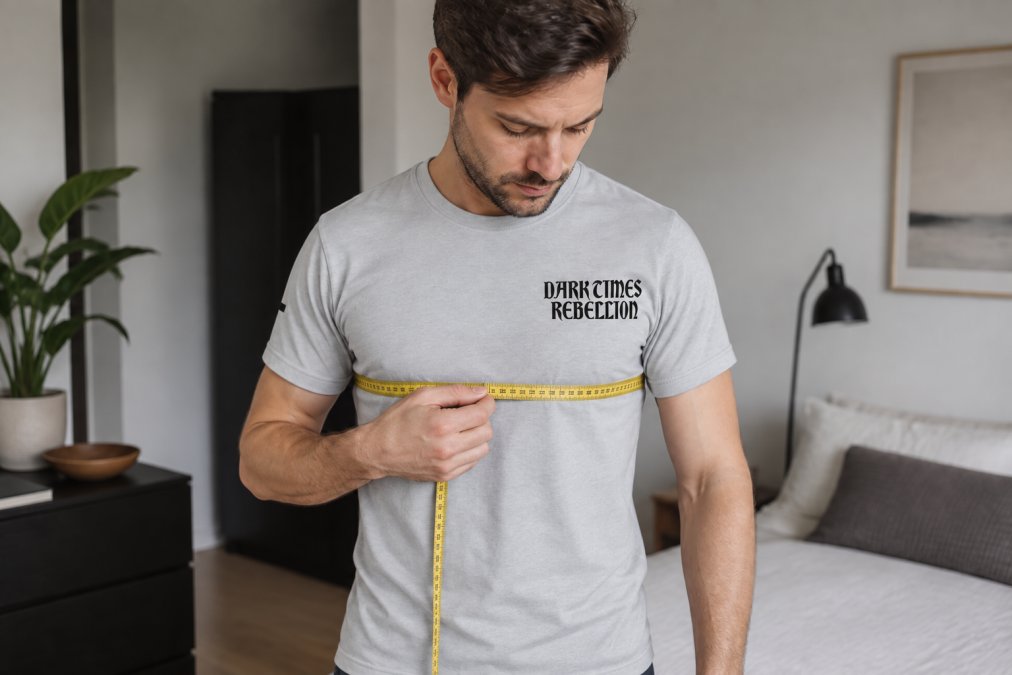
The tape should sit just under your armpits and across your shoulder blades. Write down the number in inches, then round up to the nearest whole inch. This chest circumference is what you'll compare directly against the "width" or "chest" column on any garment size chart. A common mistake is measuring over a bulky sweater or puffy jacket, which adds a full size or more of error. Measure against bare skin or a thin t-shirt for accuracy.
The Three Most Common Chest-Measuring Errors
Most guys get one of three things wrong when they measure their chest, and each error shifts the number enough to land you in the wrong size:
- Tape too low or too high. The tape must cross the nipple line at the fullest part of the pectoral muscles. Measuring an inch higher puts you on the upper chest, which is narrower, and measuring lower catches the ribcage, which is also narrower. Either mistake can drop you a full size.
- Tape not level in the back. If the tape dips down across your shoulder blades, you add roughly half an inch to an inch of slack. Keep the tape perfectly horizontal by checking yourself in a mirror or having someone verify the back is level.
- Arms pinned to your sides. When you squeeze your arms tight against your torso, you compress the chest wall and pull the tape forward, shaving off up to an inch. Let your arms hang naturally with a finger's width of space between your elbows and your ribs.
Measuring Your Shoulders and Sleeves
Shoulder width determines where the sleeve seam sits, and getting it wrong makes even a perfectly sized chest look sloppy. To measure, find the bony point where your shoulder meets your arm, then run the tape straight across your back from that point on one side to the same point on the other. Keep the tape level and don't follow the curve of your body; you want the straight-line distance.
Sleeve length is measured from the center of your back at the base of your neck, across your shoulder, and down to your wrist bone. This is called "center back" on most size charts, and it accounts for the fact that your arms attach at different points depending on your build. For a relaxed fit, add half an inch to an inch to the sleeve measurement so the cuff doesn't ride up when you reach forward.
Visual Guide: Where to Place the Tape
A picture is worth a size mistake avoided. The front view shows the tape crossing the fullest part of the chest at the nipple line, parallel to the floor. The back view shows the tape riding just under the shoulder blades and the shoulder-width line running straight across from bone to bone. The side view demonstrates the correct arm position: relaxed, slightly away from the torso, with the tape snug but not compressing the skin.
What to Do If You're Between Sizes
If your chest measurement falls exactly between two sizes on a chart, the tiebreaker is your intended fit and the fabric's behavior. For a heavyweight cotton tee like a 6.1 oz/yd² garment, size up if you're between sizes and plan to machine dry, because the dense cotton will hold its structure but can still tighten slightly over time. For a lightweight or stretch-blend tee, size down for a cleaner silhouette since the fabric will give a little with wear.
A second tiebreaker is your shoulder measurement. If your chest says Medium but your shoulders say Large, go with the shoulder measurement, because a too-narrow shoulder seam will pull and distort the entire drape of the shirt. You can always take in the waist, but you can't add fabric to the shoulders.
Shirt Fit Types: Slim, Regular, and Relaxed
Fit type is a preference, but it should also match your body shape and how you plan to wear the shirt. A slim fit tapers at the waist and has narrower sleeves, designed for athletic or lean builds. A regular fit follows your natural silhouette with a little extra room through the chest and waist, which suits most body types comfortably. A relaxed fit adds several inches through the torso and arms, ideal for bigger frames or anyone who prefers a looser drape.
The shirt size you choose only means something once you've picked the fit type, because the same chest measurement produces different garments across cuts. A man with a 42-inch chest might wear a Large in a slim fit but a Medium in a relaxed fit, since the relaxed cut already builds in extra room. Decide how you want the shirt to sit on your body before you consult any chart.
Dark Times Rebellion builds its premium tees in a relaxed fit with a 6.1 oz/yd² heavyweight cotton, so the garment drapes well without clinging. The relaxed cut gives you room to move while the heavy fabric holds its shape, which is why the fit works for many body types without looking sloppy.
Fit Type |
Chest Room |
Best For |
Typical Wear |
|---|---|---|---|
Slim |
Snug, tapered |
Athletic or lean builds |
Layering or tucked looks |
Regular |
Natural silhouette |
Most body types |
Everyday casual wear |
Relaxed |
Extra room |
Bigger frames, loose preference |
Streetwear, heavyweight tees |
Does Heavyweight Cotton Shrink? What to Know
Heavyweight cotton does shrink, but how much depends on the fabric construction and how you wash it. A 6.1 oz/yd² ring-spun cotton tee is denser and more stable than a thin 4 oz shirt, which means it resists distortion better, but no cotton garment is completely shrink-proof. The real question isn't whether heavyweight cotton shrinks, it's how you care for it after the first wash.
Garment-dyed shirts, like the ones Dark Times Rebellion sells, go through a dye process that pre-shrinks the fabric to a degree. That said, washing in hot water or running a hot dryer will still pull cotton fibers tighter over time. To preserve your fit, wash in cold water and hang dry or use the lowest heat setting on your dryer. If you're between two sizes and plan to machine dry regularly, size up to account for gradual shrinkage.
Finding True to Size Christian Apparel Online
Online shopping removes the ability to try before you buy, which makes finding true to size christian apparel a matter of trusting both the brand and its published measurements. The most reliable approach is to take your chest and sleeve measurements, then compare them against the specific size chart for the garment you want, not against a generic chart the site uses for everything.
A brand that lists garment dimensions in inches, including width, length, and sleeve center back, is giving you the information needed to make that call. When a product page shows you that a size Large measures 22 inches across the chest, you can hold your tape up and know immediately whether that matches your body. This garment-level transparency is the difference between a brand that cares about fit and one that just wants to move inventory.
At Dark Times Rebellion, every product page includes a detailed size guide with width, length, and sleeve center back measurements in inches. The premium heavyweight t-shirts are built with a relaxed fit and twill-taped neck and shoulders for durability, so the shirt holds its shape wash after wash. For most guys, ordering true to size means matching your chest measurement to the chart and trusting the cut.
Reading Size Charts the Right Way
A size chart is only useful if you know which column applies to your body. Most charts list garment measurements, meaning the physical dimensions of the shirt laid flat, not your body measurements. The chest width column on a chart is the shirt measured from armpit to armpit, which is roughly half your chest circumference. If your chest measures 40 inches around, you need a shirt with a width of about 20 to 22 inches, depending on how much room you want.
This is where many guys go wrong. They see "chest: 40 inches" on a chart and assume it means their 40-inch chest is a perfect match, when the garment's flat width actually corresponds to a larger body measurement once you account for both sides of the shirt. A garment with a 22-inch width fits a chest circumference of roughly 42 to 44 inches because the fabric stretches and drapes around your torso.
Always compare your body measurements against the garment's flat measurements with this conversion in mind. If a chart lists a size Large with a 22-inch width and your chest measures 44 inches around, that shirt will fit snugly. If you prefer room to move, look for a 23 or 24-inch width in the next size up.
Why Two "Large" Shirts Can Differ by Two Inches
The dirty secret of the apparel industry is that there is no federal standard for what a "Large" means. The Federal Trade Commission requires that clothing labels state a size, but it does not define what that size measures. That regulatory gap is why a size Large from one manufacturer can measure 21 inches across the chest while another brand's Large measures 23 inches. This practice, commonly called "vanity sizing," exists because brands know that most men reach for the same letter every time, and a brand that runs large gets repeat customers who feel good about their size.
The Two-Chart Method for Cross-Brand Consistency
To navigate this inconsistency, use a two-chart method that takes less than two minutes per brand:
- Find your anchor garment. Pick a shirt you already own that fits you perfectly. Lay it flat and measure the chest width from armpit to armpit, the length from the base of the collar to the hem, and the sleeve length from the shoulder seam to the cuff. Write these three numbers down and keep them in your phone.
- Compare against any new brand's chart. When you shop a new brand, pull up its size chart and look for the garment measurements, not the body measurements. Compare the new brand's chest width, length, and sleeve numbers against your anchor garment's numbers. If the new brand's Medium has a 21-inch chest but your anchor shirt measures 22 inches, you need a Large in that brand.
This method works because it bypasses the letter entirely. You are matching physical dimensions to physical dimensions, which is the only reliable way to buy shirts online when you can't try them on.
Red Flags on a Size Chart
Some size charts are more helpful than others, and a few warning signs should make you cautious about ordering:
- Only body measurements listed, no garment measurements. This forces you to guess how much ease the brand builds into the cut, which is exactly the information you need.
- One generic chart for all products. A brand that uses a single chart for t-shirts, hoodies, and button-downs is not measuring its garments individually. The cut of each product type differs, and so should the chart.
- No length or sleeve measurements. Chest width alone doesn't tell you if the shirt will be too short or if the sleeves will ride up. A complete chart lists at least width, length, and sleeve center back.
How to Use a Chart When You're Between Sizes
If your chest measurement puts you between two sizes on a chart, use the garment's length column as the tiebreaker. Many men find that a Medium fits their chest but runs short in the torso, especially if they are over 5'10". In that case, the Large will give you the extra inch or two of length you need, and you can accept a slightly roomier chest. Conversely, if you are under 5'8" and the Small fits your chest but the length is right, the Medium will likely be too long through the torso, so stick with the Small and accept a snugger chest.
The other tiebreaker is the fabric. A heavyweight cotton tee at 6.1 oz/yd² will not stretch out much over the course of a day, so a chart that shows a snug chest measurement will stay snug. A lighter 4 oz tee has more give and will relax slightly with wear, so you can size down with less risk.
Common Sizing Mistakes to Avoid
The most frequent sizing errors are predictable, and avoiding them comes down to a few simple habits. First, never buy based on the size you wear in dress shirts or suits; those are cut completely differently from casual tees. Second, ignore the letter on the tag from your favorite old shirt, because brand-specific sizing variance means that letter doesn't transfer reliably.
Another common mistake is ignoring the fabric weight when choosing a size. A lightweight cotton tee stretches and drapes, so a slightly smaller size still looks fine. A heavyweight fabric like 6.1 oz/yd² holds its structure, which means it won't stretch out to accommodate a too-small size, and it won't shrink into a too-tight one if you follow care instructions. Measure your body, check the garment chart, and decide on your preferred fit type before you click add to cart.
Conclusion: Wear Your Size with Confidence
Choosing the right shirt size comes down to replacing guesswork with three numbers: your chest, your shoulders, and your sleeve length. Once you have those measurements and understand how they translate to garment dimensions on a size chart, the entire process becomes repeatable across any brand you shop.
Finding true to size christian apparel that reflects your faith shouldn't require a return shipping label. Dark Times Rebellion builds premium heavyweight tees with detailed size guides on every product page, so you can order with confidence knowing the shirt fits as well as it proclaims your testimony. Join the rebellion and wear a shirt that fits your body and your convictions.
Frequently Asked Questions
Is it better to size up or down in shirts?
It depends on the shirt's fabric and your fit preference. For heavyweight cotton shirts that are garment-dyed, like the ones from Dark Times Rebellion, sizing down is risky because the fabric has less give. Sizing up creates a sloppy look. Measure your chest and compare it to the brand's size chart. If you are between sizes, choose the larger size only if you prefer a relaxed fit. For a slim fit, stick with your exact measurement.
Is a 42 inch shirt considered medium or large?
A 42 inch chest measurement typically corresponds to a size Large in most standard sizing charts. However, this can vary between brands. Always check the specific brand's garment measurements, not just the S, M, L label. For example, a size chart might list a Large with a 42-44 inch chest width. When in doubt, measure a shirt you already own that fits well and compare those numbers to the chart.
Does heavyweight cotton shrink?
Yes, heavyweight cotton can shrink, but the amount depends on how it was processed. Garment-dyed cotton, like the 6.1 oz fabric used in Dark Times Rebellion shirts, is washed after dyeing, which pre-shrinks the fabric. This means it holds its shape better after you wash it at home. To minimize any residual shrinkage, wash in cold water and tumble dry on low. This protects your investment and keeps the fit true to size.
What does 'true to size' mean when buying apparel online?
True to size means a garment's measurements match the standard size chart for that specific brand. It does not mean it matches every other brand's size chart. Finding true to size Christian apparel requires you to look at the provided garment dimensions. If a brand lists a Large with a 22 inch width and you usually wear a 22 inch width shirt, that shirt is true to size for you. Always rely on the numbers, not the label.