

Table of Contents
- Why Heavyweight Cotton Shirts for Summer Wear Make Sense
- Why Heavyweight Fabric Lasts Longer Than Thin Cotton
- Breathability of Thick Cotton Shirts: What the Weave Actually Does
- How to Style Heavyweight T-Shirts for Hot Weather
- Comparing Heavyweight Cotton Shirts for Summer Wear Options
- What to Ignore When Shopping for Summer Heavyweight Tees
- Conclusion
- Frequently Asked Questions
Last Updated: September 12, 2026
Why Heavyweight Cotton Shirts for Summer Wear Make Sense
The assumption that summer demands the thinnest fabric you can find is one of the most persistent myths in menswear. In reality, a well-constructed heavyweight cotton shirt can be more comfortable in July than the flimsy alternative hanging next to it. This guide from Dark Times Rebellion breaks down exactly why.
Here's the counterintuitive truth: fabric weight and breathability are not the same thing. A 6.1 oz heavyweight cotton shirt with an open weave moves air better than a 3.5 oz shirt woven so tightly it traps heat against your skin. Weight tells you how much cotton is in a square yard. Weave structure and yarn quality determine whether that cotton breathes.
Most shoppers buy based on how a shirt feels in the store, not how it performs after an hour in the sun. That's the mistake this article corrects.
Below, we'll show you why heavyweight cotton shirts for summer wear outperform thin alternatives, how to style them without overheating, and what to ignore when you're shopping.
Why Heavyweight Fabric Lasts Longer Than Thin Cotton
Thin cotton fails because there isn't enough fiber to hold its shape. A lightweight shirt loses structure after a few washes, develops holes at stress points, and stretches permanently at the collar. Heavyweight cotton has more material to work with, so it resists all three failure modes.
The durability gap shows up fastest at the collar and shoulders. Those are the areas that take the most stress from pulling a shirt over your head and from hanger tension. A double-needle topstitched collar on a heavyweight tee holds its shape for years. A single-stitched collar on a thin shirt starts curling within months.
There's also a cost-per-wear argument here that most buyers overlook. A shirt that survives two summers costs less per wear than a cheap shirt you replace every season, even if the cheap one costs half as much upfront.
The Construction Difference You Can Feel
Run your thumb along the inside of a collar. If you feel a strip of fabric tape reinforcing the seam, that's twill taping, and it's the single best indicator of a shirt built to last. Dark Times Rebellion uses twill-taped neck and shoulders on its heavyweight tees for exactly this reason.
The second thing to check is the hem. Double-needle hems at the armhole, sleeve, and bottom prevent the twisting that plagues lightweight cotton. A shirt with single-stitched hems will start to warp after the first few dryer cycles.
Breathability of Thick Cotton Shirts: What the Weave Actually Does
Breathability of thick cotton shirts depends on three factors: yarn thickness, weave openness, and how the fabric is finished. A heavier yarn creates small air pockets between fibers, and those pockets let body heat escape while the fabric still blocks direct sun.
Ring-spun cotton, which is what most premium heavyweight tees use, creates a smoother, denser yarn than standard carded cotton. The spinning process aligns the fibers parallel to each other, which makes the yarn stronger and the resulting fabric softer against skin. A 100% ring-spun cotton shirt at 6.1 oz moves moisture and air more effectively than a lighter shirt made from rougher, shorter-staple cotton.
Garment dyeing adds another layer of comfort. When a shirt is dyed after construction rather than as raw fabric, the cotton fibers relax and the fabric develops a broken-in softness without losing weight. That's why garment-dyed heavyweight tees feel softer on day one than piece-dyed equivalents.
How to Style Heavyweight T-Shirts for Hot Weather
The styling rule for hot weather is simple: let the shirt be the outfit. Heavyweight cotton already has enough visual presence that you don't need to layer it, and skipping layers is the fastest way to stay cool.
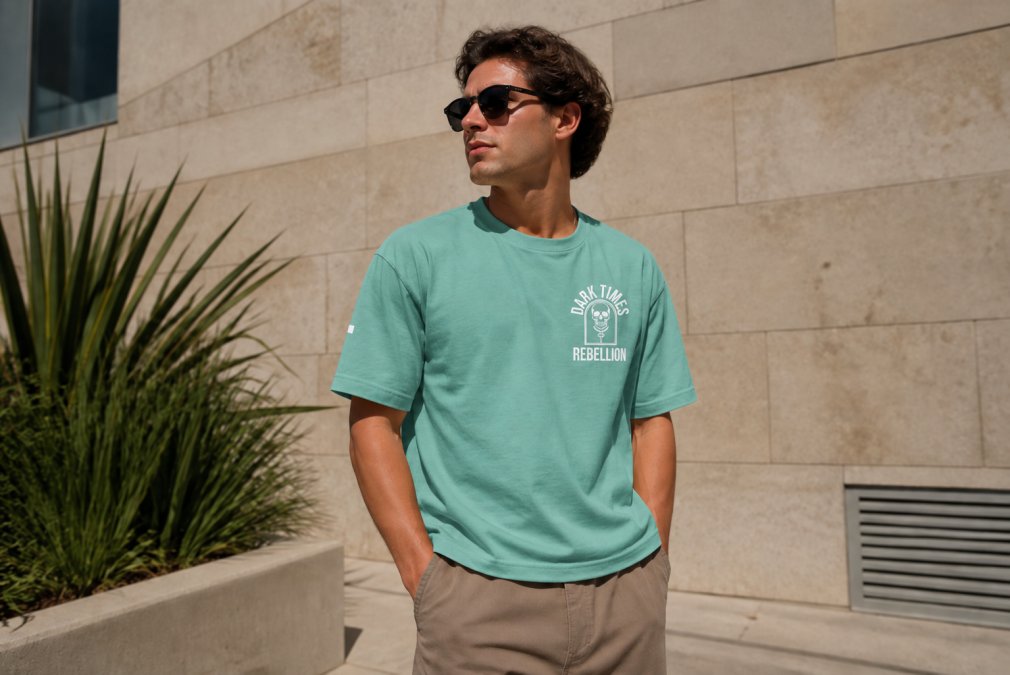
Fit, Color, and Layering Choices That Beat the Heat
Fit matters more than most people realize. A relaxed fit lets air circulate between the fabric and your skin. A tight fit traps heat and shows sweat. Size up if you're between sizes, especially in a heavyweight fabric that has less stretch than a thin knit.
Color choices affect how much heat the fabric absorbs. Light colors reflect more solar radiation, so a sea foam green or heather grey tee will feel noticeably cooler in direct sun than a black one. Black still works for evening wear or indoor settings where you're not sitting in direct sunlight.

For layering, keep it minimal. An open button-down shirt worn unbuttoned over a heavyweight tee adds visual interest without adding much heat, as long as the overshirt is a lightweight fabric like linen or chambray. Skip the hoodie, skip the jacket, and skip anything that presses another layer of fabric against your torso.
Comparing Heavyweight Cotton Shirts for Summer Wear Options
Not all heavyweight tees perform the same in summer. The table below compares the main options you'll encounter, based on fabric weight, weave, and intended use.
Shirt Type |
Fabric Weight |
Best For |
Summer Verdict |
|---|---|---|---|
Garment-dyed heavyweight tee |
6.1 oz |
All-day wear, casual settings |
Best overall balance |
Standard heavyweight tee |
6.0-6.5 oz |
Durability, structured fit |
Good, slightly stiffer |
Mid-weight ring-spun |
5.0-5.5 oz |
Layering under overshirts |
Decent, less durable |
Lightweight cotton |
3.5-4.5 oz |
Hot indoor environments |
Poor longevity |
Garment-dyed heavyweight tees win for summer because the dyeing process softens the fabric without reducing weight. A standard heavyweight tee is a close second, though it may feel stiffer for the first few washes. Mid-weight options work if you plan to layer, but they sacrifice the durability advantage that makes heavyweight cotton worth buying.
Dark Times Rebellion's heavyweight tees sit in that top tier. The Hope is Forged tee in grey uses 100% ring-spun cotton at 6.1 oz with a relaxed fit, which is the combination that performs best in heat. The Martyr tee in sea foam green offers the same construction in a lighter color that reflects more sun.
What to Ignore When Shopping for Summer Heavyweight Tees
Ignore the "summer weight" label. It's a marketing term with no standardized definition, and brands apply it to everything from 3 oz to 5 oz fabric. Check the actual fabric weight in ounces or grams per square meter instead.
Ignore claims that a shirt is "breathable" without a weave description. Every cotton shirt is technically breathable. The question is how well it moves air, and that depends on yarn structure and weave openness, not on a marketing adjective.
Ignore deep discounts on heavyweight cotton. Real heavyweight fabric costs more to produce, and a shirt priced far below the rest of the market is almost certainly lighter than advertised. If the price seems too good, the fabric weight almost certainly isn't what the listing claims.
One more thing to watch: return policies. A heavyweight shirt fits differently than a thin one, and you may need to size up. Buy from a brand that offers returns, and check the size chart against a shirt you already own rather than guessing.
Conclusion
Summer doesn't require surrendering to thin, disposable cotton. A heavyweight shirt with the right weave, a relaxed fit, and a light color will keep you cooler and last longer than the lightweight alternative. The key is knowing what to look for: fabric weight above 6 oz, ring-spun yarn, twill-taped seams, and garment-dyed construction.
Dark Times Rebellion builds heavyweight Christian apparel for believers who want their clothing to carry weight in every sense. The Hope is Forged tee and the Martyr tee both deliver 6.1 oz ring-spun cotton, double-needle construction, and a relaxed fit that works in summer heat. Enter the Rebellion and wear your commitment to the Light with apparel built to last.
Frequently Asked Questions
Is it too hot to wear heavyweight cotton shirts in the summer?
No. A 6.1 oz/yd² ring-spun cotton shirt breathes because the loose knit lets air pass through, and cotton wicks moisture away from your skin. The key is fit: a relaxed cut keeps fabric off your body so heat escapes. Dark, tight, non-breathable shirts trap heat; a properly weighted cotton tee in a lighter color does not. Many people find heavyweight cotton more comfortable than thin polyester blends that cling and hold sweat.
Why does heavyweight fabric last longer than thin cotton?
Thicker yarn and tighter construction resist the wear that destroys lightweight shirts. A 6.1 oz/yd² shirt with twill-taped neck and shoulders, double-needle hems, and a 7/8-inch topstitched collar holds its shape through repeated washing. Thin cotton develops holes at stress points and stretches out at the neck within months. The extra fabric weight means more material to absorb friction, so the shirt keeps its structure and color far longer.
How do you style a heavyweight t-shirt for a summer look?
Pair a relaxed-fit heavyweight tee with light-colored shorts or chinos and low-profile sneakers. Tuck the front slightly to define your waist without adding bulk. Choose lighter colors like grey or sea foam green to reflect heat. Avoid layering with heavy outerwear; instead, let the shirt stand alone or add a lightweight open button-down. The structured drape of heavyweight cotton looks intentional even when the outfit is simple.
Does heavyweight cotton provide better sun protection?
Yes, denser fabric blocks more UV rays than thin, loosely woven cotton. A heavyweight shirt with a tight knit creates a stronger physical barrier, reducing the amount of sunlight that reaches your skin. However, no cotton shirt replaces sunscreen on exposed areas. For extended time outdoors, combine a heavyweight tee with SPF on your face, neck, and arms. The fabric weight helps, but it is not a complete sunblock solution.