

Table of Contents
- How to Measure for Streetwear Sizing (The Right Way)
- How to Read a Size Chart for Apparel Without Guessing
- Oversized vs True to Size Streetwear: Know the Difference
- Why Streetwear Brands Size Differently (And How to Adjust)
- How to Find True to Size Streetwear When Shopping Online
- Getting True to Size Streetwear Right Every Time
- Frequently Asked Questions
Last Updated: September 29, 2026
How to Measure for Streetwear Sizing (The Right Way)
Finding true to size streetwear starts with your own body measurements, not the label on the tag. The fix: measure yourself once, write the numbers down, and use them every time you shop.
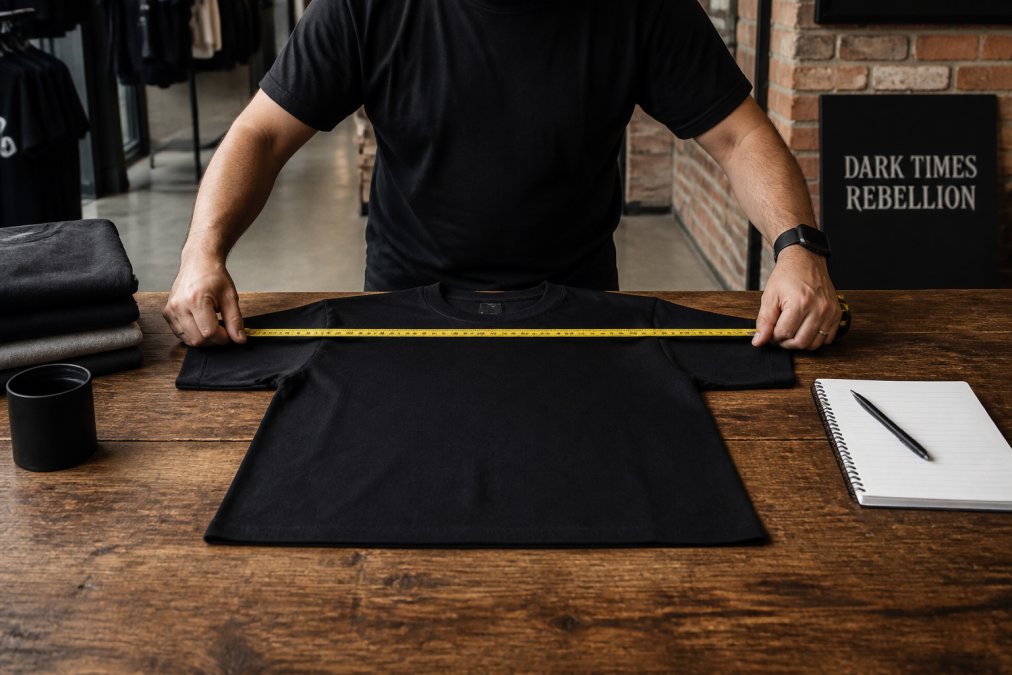
Here's the process:
- Chest width: Wrap the tape around the fullest part of your chest, under your arms. Keep it level.
- Shoulder seam: Measure from the edge of one shoulder to the other, across your back.
- Garment length: For a shirt you already own, lay it flat and measure from the collar to the hem.
- Sleeve length: Measure from the shoulder seam to the end of the cuff.
- Inseam: Measure from the crotch seam to the hem of pants you already own.
The Measurements That Actually Matter
Chest width and shoulder seam decide most fit problems; garment length and inseam affect drape. If you track only two numbers, track chest and shoulder.
How to Read a Size Chart for Apparel Without Guessing
A size chart for apparel lists body measurements, not garment measurements, unless it says otherwise. That detail trips up most shoppers, so read the fine print before picking a letter size.
Most brand charts follow the same structure:
| Chart Type | What It Shows | How to Use It |
|---|---|---|
| Body measurement chart | Your chest, waist, and height | Match your own numbers to the closest row |
| Garment measurement chart | The actual flat-lay size of the item | Match to a shirt you already own |
| Fit profile chart | Cut style (slim, relaxed, boxy) | Adds or subtracts room from the base size |
Letter Sizing vs Numerical Sizing: What the Numbers Mean
Letter sizing uses S, M, L, XL; numerical sizing uses numbers like 30, 32, or 34 for waist and inseam. Neither is more accurate, it depends on how the brand builds the fit.
Oversized vs True to Size Streetwear: Know the Difference
Oversized and true to size streetwear are not the same thing. True to size fits your normal measurements with standard ease; oversized means the brand built in extra room on purpose, usually through a drop shoulder and boxy cut.
Here's how the two compare:
- True to size: Follows your chest and shoulder numbers closely. Sleeves hit at the shoulder seam.
- Oversized: Adds width in the body and drops the shoulder seam past your natural shoulder.
- Relaxed fit: Sits between the two. Some extra room, but not a full box fit.
- Slim fit: Cuts closer to the body. Less room in the chest and arms.
Why Streetwear Brands Size Differently (And How to Adjust)
Streetwear brands size differently because there is no enforceable apparel sizing standard in the United States. The FTC can act against deceptive labeling, but it does not mandate that a "Large" measure any specific number of inches. Every label sets its own block pattern, and the letter on the tag is as much a marketing decision as a fit decision.
- Country-of-origin grading. A Japanese block is typically graded narrower through the chest and shorter in the body than the same labeled U.S. size. European blocks run slimmer through the shoulder and longer in the sleeve than U.S. blocks.
- Vanity sizing. Some brands quietly add inches while keeping the same letter on the tag, so a customer who wore a Medium elsewhere feels "smaller" in their product. The letter stays; the garment grows.
- Design intent. A brand built around a boxy, drop-shoulder silhouette will grade its Large wider than a brand built around a tapered cut, even if both call it a Large.
How to Compare Two Brands Without Buying Both
You can build a cross-brand comparison in about ten minutes using published charts and one shirt you already own.
- Pick a reference garment that fits the way you want a new piece to fit. Lay it flat.
- Measure pit-to-pit, shoulder seam to shoulder seam, and collar-to-hem. Write the three numbers down.
- Open Brand A's size chart. If it lists garment measurements, compare directly. If it lists body measurements, add the ease the fit profile implies (roughly 2 to 4 inches of chest ease for a standard fit, more for relaxed or oversized).
- Repeat for Brand B. The difference between the two charts at your target size is your adjustment.
- Record it: "Brand A L = my reference; Brand B L runs about one size small in the chest."
Reading the Fit Profile Language
Brands telegraph their grading in the fit profile copy. Treat these phrases as instructions, not flavor text:
- "Size down for a standard fit", the base block is cut oversized; the tagged size assumes you want the boxy look.
- "True to size", the block follows conventional U.S. grading; your normal letter should work.
- "Runs small, size up", the block is graded tight, often on a Japanese or European pattern.
- "Relaxed through the body", extra chest and waist ease is built in; do not add your own.
FTC guidance on textile and apparel labeling
Fabric Shrinkage and Fabric Composition Impact
Fabric shrinkage changes the fit after the first wash, so the chart you read at checkout is not the garment you'll wear in a month. Two variables control the movement: fiber content and fabric weight.
- 100% cotton, not pre-shrunk. Expect measurable shrinkage in length and slight shrinkage in width after a hot wash and dry. Length changes most.
- 100% cotton, pre-shrunk or garment-washed. Shrinkage is largely spent before it reaches you; fit stays close to the chart.
- Cotton-poly blends. The synthetic fiber resists shrinkage and holds shape through repeated washing. Fit is more stable, but the hand feel differs.
- Heavyweight cotton (high GSM). Dense knits move less in the wash than lighter knits but feel stiffer until broken in. Mid-weight and lightweight knits tend to stretch at the collar and cuffs rather than shrink.
How to Find True to Size Streetwear When Shopping Online
Finding true to size streetwear online comes down to four checks before you add to cart: chart type, fit profile, fabric composition, and return terms. Do all four and you convert a guess into a decision.
A repeatable routine:
- Measure a reference garment. Lay flat a shirt or hoodie that fits the way you want the new piece to fit. Record pit-to-pit, shoulder seam to shoulder seam, and collar-to-hem.
- Identify the chart type. Body chart means add ease; garment chart means compare directly. If it doesn't say, assume body and add ease.
- Read the fit profile. "Size down," "true to size," and "runs small" are grading instructions. Follow them.
- Check the fabric. Unwashed 100% cotton that gets machine-dried will move after the first wash; pre-shrunk or blended holds.
- Read the return window and condition rules. Note the deadline, tag requirements, and who pays return shipping.
- Save the chart. Screenshot it at checkout to compare against the delivered garment later.
This takes about five minutes and prevents most returns.
Returns and Secondary Market Sizing
Returns and resale are your verification layer when the chart is ambiguous or missing.
- Ask for flat-lay measurements: pit-to-pit, shoulder to shoulder, and length, the same three numbers you already track.
- Ask for a photo of the tape measure on the garment, not just a typed number. A photo confirms the measurement was taken.
- Compare those numbers to your reference garment, not the tag. If they match your reference, the fit will match regardless of the tag.
- Ask whether the item has been washed. A washed 100% cotton piece may already have shrunk, changing the numbers you're comparing.
A Brand Variance Log You Can Start Today
The highest-leverage habit for online streetwear shopping is a running note recording how each brand's tagged size compares to your reference measurements. Start with four columns:
| Brand | Tagged Size Bought | Chest vs. Reference | Verdict |
|---|---|---|---|
| Brand A | L | +1 in. | Size down next time |
| Brand B | L | Matches | True to size |
| Brand C | L | -1.5 in. | Size up next time |
Getting True to Size Streetwear Right Every Time
Getting true to size streetwear right every time is a habit, not a talent. Keep your measurements saved, read the chart type, and check the fit profile.
- Save your chest, shoulder, and length numbers in your phone notes.
- Screenshot the size chart when you buy, so you can compare later.
- Track which brands run big and which run small in a simple list.
- Buy true to size in oversized cuts to keep the intended silhouette.
Frequently Asked Questions
How do I know if a streetwear brand runs true to size?
Check three things: the brand's published size chart with actual garment measurements, customer reviews that mention fit, and the fabric composition. If the chest width on the size chart matches your best-fitting shirt within 1 inch, the brand likely runs true to size. Brands using heavyweight cotton and drop shoulder construction often run slightly larger than standard sizing because the silhouette is intentionally relaxed. When in doubt, measure a shirt you already own and compare it directly to the chart.
Should I size up or down for oversized streetwear?
Size up if you want the intended oversized look shown on the model. Size down if you want a closer fit that still has some room. The key is understanding the brand's fit profile first. A boxy cut with drop shoulders already runs wide, so sizing up may create a silhouette that swallows you. A tapered cut with a standard shoulder seam needs sizing up to achieve that relaxed streetwear aesthetic. Always check the garment length and chest width before deciding.
Why do streetwear brands have different sizing standards?
Streetwear sizing varies because there is no universal standard across the industry. Brands develop their own fit profiles based on their design philosophy, target customer, and garment construction. A brand focused on boxy cuts with drop shoulders will size differently than one using slim fit templates. Fabric shrinkage also plays a role: heavyweight cotton can shrink 3-5% after the first wash, so some brands pre-shrink while others account for shrinkage in their listed measurements.
What is the difference between boxy fit and regular fit in streetwear?
A boxy fit has a wider chest and shorter garment length, creating a square silhouette with drop shoulders and a relaxed fit. A regular fit follows the body more closely with standard shoulder seams and a straighter taper. Boxy cuts work well for layering and that classic streetwear aesthetic, while regular fits suit a cleaner look. Both can be true to size depending on the brand, so always compare the actual measurements rather than relying on the label alone.
Sizing is where good apparel either earns its place in your rotation or ends up in a donation bag. At Dark Times Rebellion, we build heavyweight, premium pieces meant to last and to be worn with purpose. Our apparel is made for believers who want to stand firm and wear their faith boldly, not hide it. Check our size chart, measure once, and order with confidence. Enter the Rebellion and wear your commitment to the Light.