

Table of Contents
- What Makes a Quality Check for Graphic T-Shirts Essential
- Inspect Fabric Weight and GSM for Durability
- Examine Stitching and Seam Construction Quality
- How to Tell If a Screen Print Is Good Quality
- Heavyweight Cotton T-Shirt Benefits and What to Look For
- T-Shirt Construction Quality Checklist You Can Use Today
- Signs of Poor Manufacturing and What to Avoid
- Conclusion
Last Updated: August 27, 2026
What Makes a Quality Check for Graphic T-Shirts Essential
When you're investing in premium apparel, you need to know what separates a shirt that lasts through dozens of washes from one that falls apart after three. A quality check for graphic t-shirts isn't just about aesthetics, it's about durability, construction integrity, and whether the print will outlast the fabric itself.
At Dark Times Rebellion, we offer heavyweight Christian apparel that's engineered to last. But not every graphic tee on the market meets that standard. The difference between a shirt that holds up and one that doesn't comes down to fabric weight, stitching precision, print quality, and manufacturing attention to detail. Understanding how to evaluate these elements means you won't waste money on garments that fade, shrink unpredictably, or develop holes at the seams within months.

This guide walks you through a practical, step-by-step quality check for graphic t-shirts that you can perform yourself, whether you're buying from a brand for the first time or auditing your existing collection. You'll learn what to look for in fabric construction, seam integrity, print durability, and manufacturing quality so you can make informed decisions about which pieces are worth your investment.
Inspect Fabric Weight and GSM for Durability
The foundation of any quality t-shirt starts with fabric weight, measured in grams per square meter (GSM). This single metric tells you more about longevity than almost anything else.
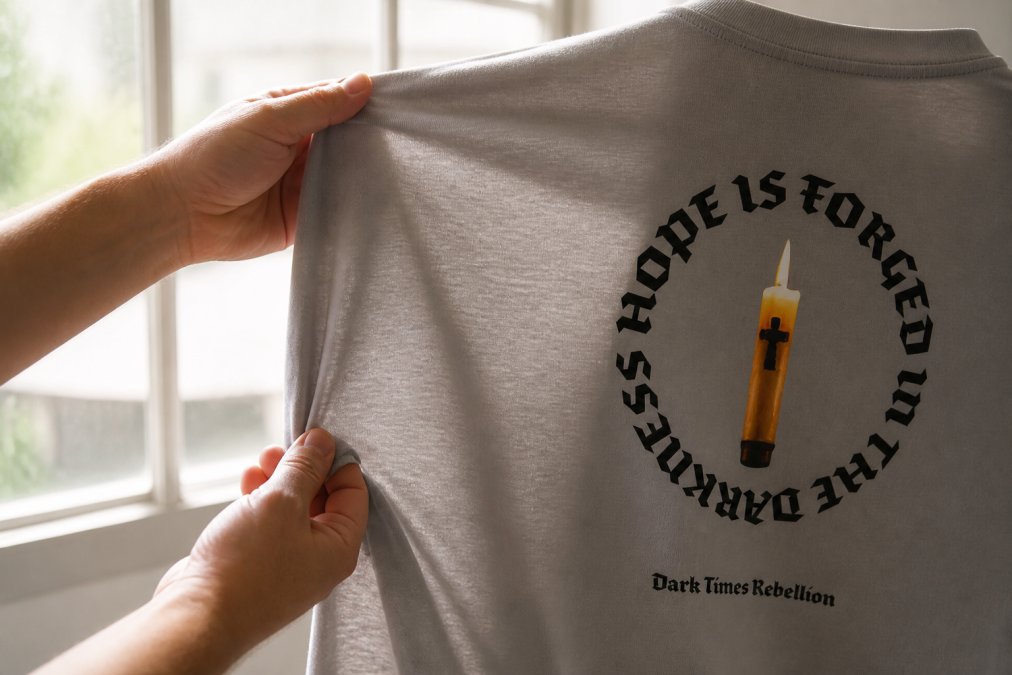
Lightweight shirts typically fall between 130-150 GSM (peer-reviewed research). They're breathable and comfortable for warm weather, but they're prone to pilling, fading, and losing their shape after repeated washing. Mid-weight shirts run 150-180 GSM and offer a reasonable balance between comfort and durability. Heavyweight shirts, the category Dark Times Rebellion specializes in, sit at 180-210 GSM or higher. At 206.8 GSM (6.1 oz/yd²), our Hope is Forged and Defeat Darkness shirts deliver the structural integrity that keeps a graphic print looking sharp through dozens of wash cycles.

To perform your own quality check for graphic t-shirts, hold the shirt up to light and examine the fabric density. A high-quality shirt will feel substantial in your hands, not flimsy or paper-thin. Run your fingers across the weave. You should feel a tight, consistent texture with no thin spots or transparency. If you can see light through the fabric easily, the GSM is too low for long-term durability.
Ring-spun cotton construction also matters significantly. This process twists longer cotton fibers together before spinning them into yarn, creating a smoother, stronger final fabric compared to standard combed cotton (cotton.org). The result is better color retention and less pilling over time. When examining fabric quality, look for a smooth hand-feel and consistent color saturation, signs that the cotton has been properly processed.
Examine Stitching and Seam Construction Quality
Seams are where most cheap t-shirts fail. A single weak seam can unravel under stress, turning a shirt into a rag months before the fabric itself wears out.
Start by examining the neck area. High-quality shirts feature a 7/8" double-needle topstitched collar, this means two parallel lines of stitching run along the neckline, providing reinforcement that prevents stretching and tearing. The collar should also have twill tape sewn into the seam, a reinforcement strip that stabilizes the neckline and maintains its shape wash after wash. When you run your finger along the neck, you should feel this tape as a structured band, not a loose or flapping edge.
Next, inspect the armholes and sleeve seams. Double-needle construction here is essential, it means the machine stitched two parallel lines simultaneously, creating a stronger seam that's less likely to split. Look for consistent stitch density (the number of stitches per inch). Tight, even stitching indicates precision manufacturing. Loose, irregular stitching or visible gaps between stitches signal rushed production and weak seam integrity.
Check the side seams and bottom hem. These areas experience significant stress during wearing and washing. Flat-locked seams or tubular construction (where the sides are sewn in a continuous loop rather than two separate seams) provide superior durability. Run your hand along the hem, it should be smooth and even, with no puckering or loose threads.
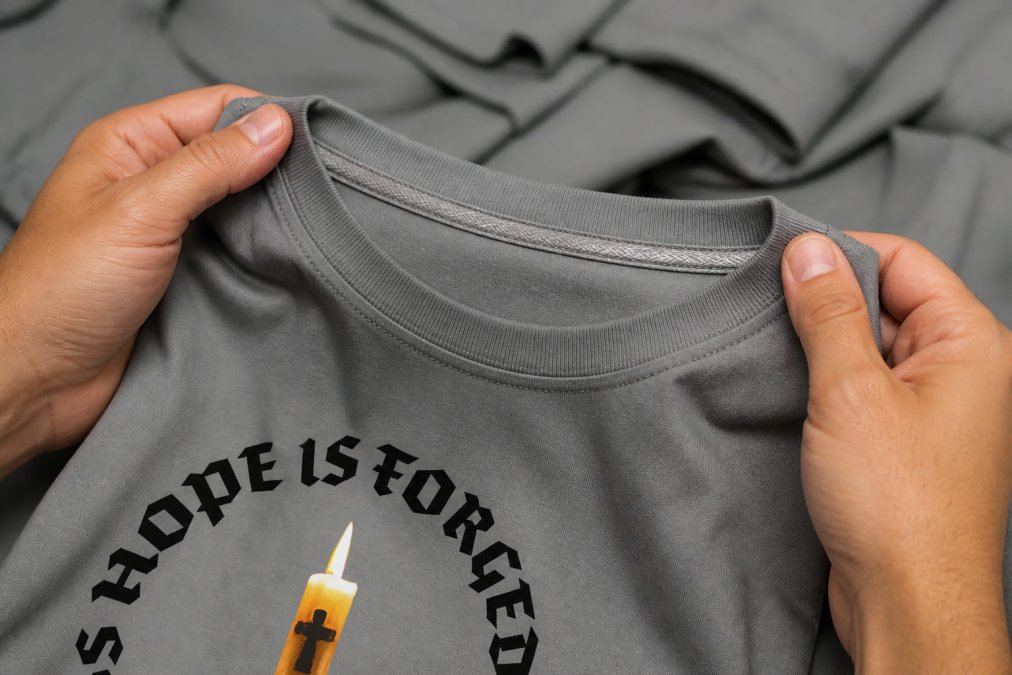
A common mistake is assuming that visible stitching means quality. What matters is consistency, tension, and placement. Premium manufacturers use industrial-grade equipment calibrated to maintain precise stitch density. The stitching should be tight enough that you can't easily pull the threads, but not so tight that it distorts the fabric.
How to Tell If a Screen Print Is Good Quality
The print is often what catches your eye, but it's also what typically fails first on lower-quality shirts. A quality check for graphic t-shirts must include a thorough evaluation of the print itself.
Examine the ink coverage first. Hold the shirt up to light and look at the printed area from both sides. High-quality screen prints show consistent color saturation with no thin spots, bleeding, or uneven coverage. The ink should sit on top of the fabric, not soak through it completely. If you can see the print clearly from the back side with the same intensity as the front, the ink has likely soaked through the fabric rather than sitting on the surface, a sign of improper curing or low-quality ink.
Feel the print texture. Quality screen prints have a slightly raised, tactile surface. The ink should feel like a thin layer on top of the fabric, not a stiff, plastic coating that cracks when you flex the shirt. Run your fingers across the edges of the design. Sharp, clean edges indicate precise screen registration (alignment of colors). Blurry or feathered edges mean the screens weren't properly aligned during printing, this is a red flag for overall print quality.
Check for color cracking and fading resistance. Gently fold the printed area and examine the creases. If the ink cracks or flakes off, you're looking at inferior ink or poor curing. Quality prints should flex with the fabric without damage. Additionally, examine the color intensity. A faded or washed-out appearance on a new shirt suggests low-quality dyes or improper color mixing.
Colorfastness, the ability of the print to resist fading, is critical for longevity. Darker prints generally hold color better than light pastels, but quality manufacturers use dyes formulated to resist both sun exposure and repeated washing. If the print looks dull or lacks vibrancy on a brand-new shirt, it will only get worse.
Heavyweight Cotton T-Shirt Benefits and What to Look For
Heavyweight cotton t-shirt benefits extend far beyond comfort. A quality check for graphic t-shirts should prioritize heavyweight construction because it directly impacts how long your investment lasts.
Heavyweight shirts, typically 180 GSM and above, resist pilling, maintain their shape through dozens of wash cycles, and provide a premium feel that signals quality from the moment you put the shirt on. The fabric drapes better, holds graphics more effectively, and doesn't cling to your body in unflattering ways. For graphic designs, this matters enormously because the print sits on a stable, structured surface rather than a thin, flimsy base that distorts with movement.
When evaluating heavyweight cotton options, look for shirts made from ring-spun or loopwheeled cotton. Ring-spun construction creates longer, stronger fibers that resist pilling and fading. Loopwheeled production is a more artisanal process where the yarn is looped and twisted multiple times, creating exceptional softness while maintaining strength. Both methods cost more to produce, which is why they appear primarily in premium brands.
Check the fabric weave as well. A tight, consistent weave indicates that the cotton has been properly processed and aligned. Loose weaves feel soft initially but pill more easily and fade faster. Garment-dyed heavyweight shirts, where the finished garment is dyed rather than the yarn being dyed before construction, often show superior color consistency and durability because the dye penetrates the entire finished piece uniformly.
The weight should feel substantial in your hands. A 6.1 oz/yd² shirt (like Dark Times Rebellion's Hope is Forged and Defeat Darkness designs) strikes the ideal balance: heavy enough for durability and structure, but not so heavy that it becomes uncomfortable in warm weather. Anything below 150 GSM will feel thin and cheap. Anything above 210 GSM may feel stiff or overly warm for most climates.

T-Shirt Construction Quality Checklist You Can Use Today
Here's a practical checklist you can reference every time you evaluate a graphic t-shirt. Run through these points before making a purchase decision:
Quality Aspect |
What to Check |
Red Flags |
|---|---|---|
Fabric Weight |
180+ GSM for durability; should feel substantial |
Feels thin, paper-like, or transparent to light |
Fiber Type |
Ring-spun or loopwheeled cotton |
Standard combed cotton or cotton blends |
Seam Construction |
Double-needle stitching on neck, sleeves, and hem |
Single-needle seams, loose threads, or puckering |
Neck Reinforcement |
7/8" topstitched collar with twill tape |
Flat collar without visible tape or reinforcement |
Print Coverage |
Consistent ink saturation front and back; sharp edges |
Uneven coverage, bleeding, or feathered edges |
Print Texture |
Slightly raised, flexible surface |
Stiff, cracking, or plastic-like feel |
Color Intensity |
Vibrant, saturated color on new shirt |
Dull, washed-out, or faded appearance |
Hem Quality |
Even, smooth hem with tight stitching |
Puckered, loose, or uneven stitching |
Overall Feel |
Substantial, well-made, premium hand-feel |
Cheap, flimsy, or poorly finished |
Start with fabric weight and fiber type. These two factors alone eliminate most low-quality options. Then move to seam inspection, spend 30 seconds examining the neck, armholes, and side seams. Finally, evaluate the print quality by holding it to light and feeling the ink texture.
This quality check for graphic t-shirts takes less than two minutes but catches the vast majority of manufacturing shortcuts that lead to premature failure.
Signs of Poor Manufacturing and What to Avoid
Certain manufacturing shortcuts appear consistently in low-quality graphic t-shirts. Knowing what to avoid saves you from wasted money and frustration.
Uneven or loose stitching is the most common red flag. If you examine the seams and find inconsistent stitch spacing, loose threads, or gaps between stitches, the shirt was likely produced on poorly maintained equipment or by undertrained operators. This directly predicts seam failure within months.
Thin, transparent fabric that feels cheap in your hands indicates low GSM and poor cotton quality. These shirts typically develop holes at stress points (armpits, neckline) within 10-15 washes (peer-reviewed research). They're not worth the initial savings.
Print quality issues reveal themselves through bleeding (where ink spreads beyond the design edges), uneven color saturation, or ink that cracks when you flex the fabric. These problems indicate either low-quality screen printing equipment, improper curing temperatures, or substandard ink formulations. The print will fade dramatically with each wash.
Shrinkage inconsistency is another warning sign. If the manufacturer claims the shirt is pre-shrunk but provides no documentation or sizing data, assume unpredictable shrinkage. Quality manufacturers test their garments and provide accurate shrinkage percentages. Dark Times Rebellion's heavyweight shirts are designed with precise sizing to account for minimal shrinkage.
Collar and neckline issues, stretching, curling, or loose edges, indicate missing twill tape or single-needle construction. These shirts will look worn out after a few washes because the neckline won't maintain its shape.
Conclusion
A quality check for graphic t-shirts doesn't require expertise, just attention to fabric weight, seam construction, and print durability. The difference between a shirt that lasts for years and one that falls apart in months comes down to these specific, measurable factors.
If you're looking for Christian apparel built to withstand both daily wear and the spiritual weight of your conviction, Dark Times Rebellion's heavyweight t-shirts deliver on every metric covered in this guide. Our 6.1 oz/yd² ring-spun cotton, double-needle construction with twill-taped reinforcement, and screen-printed designs engineered for colorfastness represent the standard for quality in faith-driven fashion. Enter the Rebellion and wear apparel built to last as long as your commitment to standing firm in your faith.
Frequently Asked Questions
How can you tell if a graphic t-shirt is high quality?
Check three core areas: fabric weight (look for 6+ oz/yd² for durability), stitching (double-needle construction throughout), and print quality (no cracking, fading, or ink bleeding). Ring-spun cotton feels softer and lasts longer than standard cotton. Examine seams closely—flat-locked or side-seam construction holds up better through washing. High-quality graphic t-shirts maintain their shape, color, and print integrity after multiple washes.
What fabric weight is best for durable graphic tees?
Fabric weight of 6+ oz/yd² (approximately 204 g/m²) is ideal for durability and longevity. This heavyweight construction resists pilling, maintains its shape through wear and washing, and provides better opacity so graphics show clearly. Ring-spun cotton at this weight offers superior hand-feel and breathability compared to lighter alternatives. Garment-dyed heavyweight options like Dark Times Rebellion's offerings combine durability with comfort.
How do you check if a screen print will last?
Inspect the print edges for clean, sharp lines without fraying or bleeding into the fabric. The ink should feel smooth and flexible, not stiff or cracked. Rub the print gently—quality prints don't flake off easily. Check that ink coverage is even across the entire design with no thin spots. Look for consistent color saturation. High-quality screen printing uses proper curing temperatures and ink formulations that bond securely to ring-spun cotton.
What are signs of poor-quality t-shirt construction?
Watch for single-needle stitching (instead of double-needle), uneven seams, loose threads, or visible knots. Poor-quality collars lack twill tape reinforcement and wrinkle easily. Cheap construction shows misaligned graphics, thin fabric (under 5 oz/yd²), and prints that crack or fade after a few washes. Armhole and sleeve hems should be cleanly finished, not puckered. Inconsistent sizing across the same garment size indicates rushed manufacturing.