

Table of Contents
- What Ring-Spun Cotton Actually Is (and Why It Feels Different)
- Ring-Spun Cotton vs Regular Cotton: Softness, Strength, and Surface
- Ring-Spun Cotton vs Combed Cotton: What the Labels Don't Tell You
- The Real Benefits for T-Shirts: Comfort, Durability, and Print Quality
- How to Wash Ring-Spun Cotton Shirts So They Keep Their Feel
- The Best Cotton for T-Shirts: A Practical Buying Checklist
- Trade-Offs and Limitations Nobody Mentions
- Conclusion: Why Ring-Spun Cotton Belongs in Your Rotation
- Frequently Asked Questions
Last Updated: October 21, 2026
What Ring-Spun Cotton Actually Is (and Why It Feels Different)
Ring-spun cotton is a cotton yarn made by continuously twisting and thinning the cotton fibers during spinning, which aligns them into a tight, smooth strand that produces softer, stronger fabric than standard cotton. At Dark Times Rebellion, we build our heavyweight tees on 100% ring-spun cotton because the yarn construction changes how the shirt feels, drapes, and holds up.
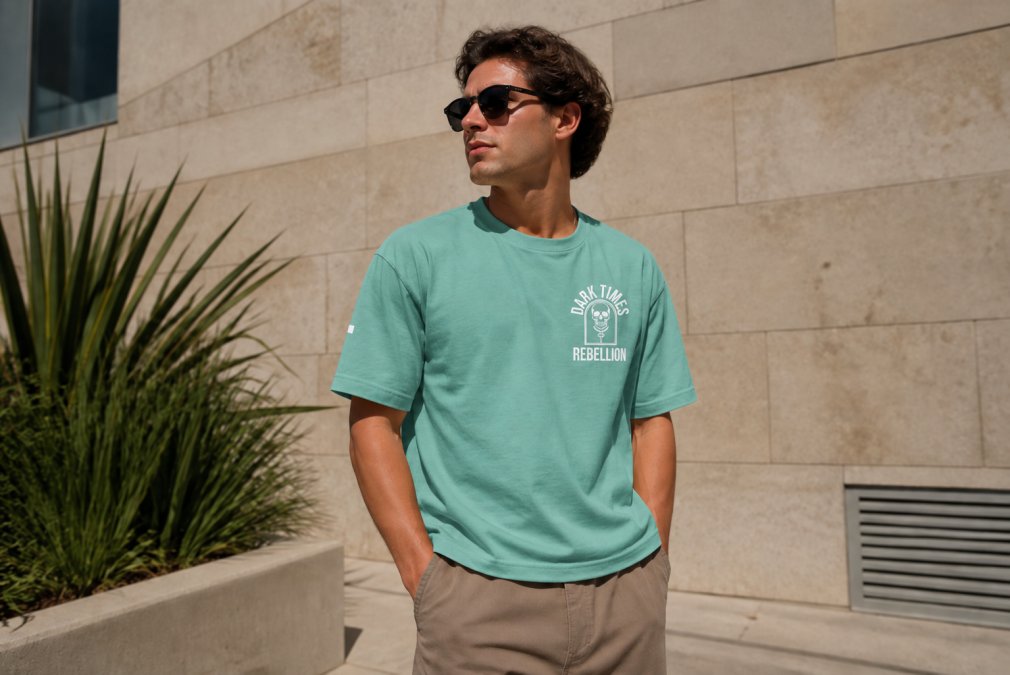
The difference starts at the fiber level. Standard cotton yarn is spun quickly with less twisting, leaving shorter fibers and impurities in the strand. Ring-spinning pulls the fibers tighter and more evenly, so fewer rough ends poke out of the finished fabric. That is why a ring-spun shirt feels smoother against your skin from the first wear.
How the Ring-Spinning Process Works
The process runs in three stages. First, cotton fibers are carded and drawn into a loose rope. Next, a spinning frame twists that rope while a small ring and traveler control the tension, thinning the yarn as it spins. Finally, the tightly twisted yarn is wound onto bobbins for knitting.
That controlled twisting is the whole game. More twist means a denser, more uniform yarn with fewer weak points. The result is a fabric with a cleaner surface and better tensile strength, which matters most in a garment you wash and wear constantly.
Ring-Spun Cotton vs Regular Cotton: Softness, Strength, and Surface
Ring-spun cotton wins on softness and surface smoothness, while regular cotton wins on price. That is the honest trade-off in one line.
Regular cotton, sometimes called open-end cotton, is spun faster and cheaper. Short fibers and small impurities stay in the yarn, so the fabric has a slightly rougher surface texture and more visible fiber ends. You feel it in the first wash and you see it as the shirt ages.
Ring-spun yarn's tighter twist and aligned fibers give you three practical wins:
- Softness: smoother yarn against the skin, less scratch
- Fiber strength: tighter twist resists fiber breakage under repeated washing
- Print surface: a flatter face for direct-to-garment printing and screen printing
Ring-Spun Cotton vs Combed Cotton: What the Labels Don't Tell You
Combed cotton and ring-spun cotton are not rivals. Combing is a preparation step that removes short fibers and impurities before spinning. Ring-spinning is the spinning method itself.
That means a shirt can be combed and ring-spun at the same time, and the best T-shirt blanks usually are. Combing removes the short, rough fibers; ring-spinning then twists the remaining long-staple cotton into a smooth, strong yarn.
What the label often hides is which one it means. "Combed cotton" alone tells you nothing about how the yarn was spun. "Ring-spun" alone tells you nothing about fiber prep.
The Real Benefits for T-Shirts: Comfort, Durability, and Print Quality
For T-shirts, ring-spun cotton delivers three benefits that compound over time: comfort, durability, and a better print surface.
Comfort comes from the smooth yarn. Fewer rough fiber ends means less friction against skin, which is why ring-spun tees feel broken-in sooner.
Our Defeat Darkness and Hope is Forged tees use 100% ring-spun cotton at 6.1 oz/yd², garment-dyed, with twill-taped neck and shoulders and double-needle hems.

Breathability, Fabric Weight, and Warm-Climate Wear
Ring-spun cotton breathes well because cotton itself is breathable, but fabric weight decides how it wears in heat.
Here is how weight translates to real wear:
- 4.0-4.5 oz/yd² (about 136-153 GSM): light and airy, best for hot, humid summers and layering under a button-down. Expect more show-through on light colors and less structure in the drape.
- 5.0-5.5 oz/yd² (about 170-186 GSM): the middle ground most retail tees use. Breathable enough for warm weather, substantial enough to hold a print and keep its shape through a season of washes.
- 6.0-6.5 oz/yd² (about 203-220 GSM): heavyweight. A 6.1 oz/yd² ring-spun tee is a year-round shirt in most climates; it is heavier than a thin fashion tee, but ring-spun yarn's density means it still moves air. It drapes with more structure and layers well under a jacket in fall and spring.
- 7.0 oz/yd² and up (about 237 GSM and up): workwear and streetwear territory. Durable and opaque, but slower to dry and warmer in peak heat.
If you live somewhere warm, the fit matters as much as the weight. A relaxed fit with room through the chest and shoulders keeps the fabric off your skin and lets air circulate.
Defeat Darkness - Premium T-Shirt - Grey →
Drape is the other weight-driven trait shoppers notice but rarely see named. Lighter ring-spun cotton falls close to the body and moves easily; heavier ring-spun cotton holds a cleaner silhouette and resists clinging. Neither is better, they suit different body types, layering habits, and seasons.
How to Wash Ring-Spun Cotton Shirts So They Keep Their Feel
Wash ring-spun cotton shirts inside out in cold water on a normal cycle, then tumble dry on low or hang dry. That routine protects the smooth yarn surface and limits shrinkage.
A few habits keep the fabric in shape longer:
- Turn the shirt inside out before washing to protect the print
- Skip fabric softener, which coats the fibers and dulls the hand feel
- Avoid bleach and high heat, both of which weaken cotton fibers
- Hang dry when you can; low heat when you can't
Garment-dyed ring-spun cotton is pre-washed, so it softens over time rather than shrinking dramatically on the first wash. Cold water and low heat keep it that way.
The Best Cotton for T-Shirts: A Practical Buying Checklist
The best cotton for T-shirts is ring-spun, long-staple cotton, ideally combed and garment-dyed, at a fabric weight that matches your climate. Use this checklist when you shop:
- Label says "100% ring-spun cotton" or "combed ring-spun cotton"
- Fabric weight is listed in oz/yd² or GSM (6.1 oz/yd² / about 207 GSM is a solid heavyweight)
- Garment-dyed or pre-washed to reduce shrinkage
- Twill-taped neck and shoulders for durability
- Double-needle hems on sleeves and bottom
- Relaxed fit if you want airflow in warm weather
- Size chart with actual measurements, not just S/M/L
That last point matters. A size chart with chest width and body length in inches tells you more than a generic size label. If you are between sizes and want a looser drape, size up.
How to Identify Ring-Spun Cotton on a Product Listing
Most product pages bury the yarn construction in a bullet list or a spec table, and the wording varies. Here is how to read what is actually there:
- Look for the exact phrase. "Ring-spun" or "ring spun" in the fabric description is the clearest signal. "Combed ring-spun" is stronger still, because it tells you the fiber was prepared before spinning. A listing that only says "100% cotton" or "premium cotton" is not telling you how the yarn was made.
- Check the weight line. A ring-spun claim paired with a listed weight (for example, 6.1 oz/yd² or 207 GSM) is more credible than a ring-spun claim with no weight at all. Weight is the easiest spec to verify and the hardest to fake.
- Read the construction details. Twill-taped neck and shoulders, double-needle hems, and side-seamed versus tubular bodies are signs the brand invested in the garment, not just the yarn. Ring-spun yarn in a poorly sewn shirt still falls apart at the seams.
- Watch for vague upgrades. Terms like "buttery soft," "premium cotton," or "luxury feel" are marketing, not construction. They can appear on open-end cotton shirts too. Treat them as claims to verify against the spec table, not as evidence.
- Distinguish ring-spun from combed. Ring-spun describes how the yarn was twisted; combed describes an extra fiber-preparation step that removes short fibers and impurities. A shirt can be one, the other, or both. "Combed cotton" alone tells you nothing about how the yarn was spun, and "ring-spun" alone tells you nothing about fiber prep. Read for both terms.
- Check the fiber length if it is listed. Long-staple cotton (often named as Supima, Pima, or Egyptian cotton) spins into smoother, stronger yarn than short-staple cotton. A ring-spun shirt made from long-staple fiber is the higher-quality combination.
- Confirm the return policy. If the listing is thin on specs, a brand that accepts returns on worn or washed items is effectively letting you test the hand feel yourself. That is often the fastest way to judge a ring-spun claim.
A listing that passes most of these checks is doing more than repeating a buzzword. A listing that fails them may still be a fine shirt, but you are buying on faith rather than on construction.
Trade-Offs and Limitations Nobody Mentions
Ring-spun cotton costs more to produce, and that price shows up on the tag. The extra spinning steps take time and energy, so a ring-spun tee will usually cost more than a basic open-end cotton shirt. That is a real limitation, not a marketing line.
Heavyweight ring-spun fabric also takes longer to dry and can feel warm in peak summer heat if you run hot. It is not the lightest option for extreme humidity.
Conclusion: Why Ring-Spun Cotton Belongs in Your Rotation
A T-shirt is only as good as the yarn it is built from, and ring-spun cotton gives you softer hand feel, stronger fiber, and a cleaner print surface in one upgrade. The trade-offs are real: higher cost, slower drying, and a label that still requires you to read the details.
At Dark Times Rebellion, we build our heavyweight tees on 100% ring-spun cotton at 6.1 oz/yd², garment-dyed with twill-taped neck and shoulders and double-needle hems. It is apparel made to hold up and to carry a message worth wearing.
Frequently Asked Questions
Is ring-spun cotton softer than regular cotton?
Yes, in most cases. Ring spinning twists cotton fibers tighter and more evenly than open-end spinning, which presses out impurities and creates a smoother yarn. That smoother yarn sits softer against skin from the first wear. Regular or open-end cotton keeps more short fibers and rough edges, so it can feel coarser and often needs several washes before it relaxes. Ring-spun cotton also softens further over time, so the gap widens with wear.
Does ring-spun cotton shrink?
Ring-spun cotton can shrink, but garment-dyed and pre-washed versions shrink less because much of the contraction happens before the shirt reaches you. To limit shrinkage on any ring-spun cotton shirt, wash cold, skip high heat in the dryer, and hang or lay flat to dry. Expect a small amount of relaxation or tightening in the first few washes. Always check the size guide and the care label on the specific shirt rather than assuming all ring-spun cotton behaves the same.
Are ring-spun cotton T-shirts more durable?
They usually are. Ring spinning aligns fibers and twists them tightly, which reduces fiber breakage and makes the yarn stronger under repeated washing and wear. Fewer loose short fibers also means less pilling and a cleaner surface over time. Durability still depends on fabric weight and construction. A 6.1 oz/yd² ring-spun shirt with twill-taped neck and shoulders and double-needle hems holds up better than a lightweight ring-spun tee with single stitching.
Is ring-spun cotton breathable enough for warm weather?
Yes. Ring-spun cotton is still cotton, so it breathes and moves moisture the way cotton does. The main variable is fabric weight. A 6.1 oz/yd² heavyweight ring-spun tee is denser than a 4 oz/yd² shirt, so it feels warmer in peak heat but works well for evenings, indoor wear, and cooler months. In hot climates, look for lighter ring-spun weights or a relaxed fit that lets air move.
You want a shirt that survives the wash, keeps its print, and says something real. Dark Times Rebellion builds heavyweight, 100% ring-spun cotton tees for believers who refuse to blend in. Explore the Defeat Darkness and Hope is Forged tees, check the size chart, and enter the rebellion with apparel made to last.