

Table of Contents
- Why Heavyweight Cotton Requires Different Care
- How to Prevent Cotton Shirt Shrinkage
- Step-by-Step Guide to Washing Heavyweight Cotton Tees
- Maintaining Graphic Print Quality on Shirts
- Air Drying vs Machine Drying Cotton Tees
- Storage and Long-Term Care for Heavyweight Cotton
- Common Mistakes to Avoid When Washing Heavyweight Cotton
- Frequently Asked Questions
Last Updated: September 17, 2026
Why Heavyweight Cotton Requires Different Care
When you wash heavyweight cotton, you're caring for fabric that isn't like standard t-shirts. It's built to last. The denser fabric, stronger fibers, and heavier weight mean your washing approach needs to match the material's durability.
Most people treat all cotton the same way. They don't. Lightweight cotton can handle aggressive washing. Heavyweight cotton demands respect. The thicker fibers hold more water, take longer to dry, and can shrink or fade if you're careless with temperature and detergent choice.
At Dark Times Rebellion, we craft premium heavyweight cotton tees designed for daily wear and spiritual purpose. These shirts are built to become part of your wardrobe for years, not months. That longevity depends entirely on how you care for them.

The core issue: heavyweight cotton absorbs more water and heat than lightweight fabric. This means standard washing practices can damage the garment. You need a strategy that protects the fabric while keeping it clean.
Here's what separates proper care from damage:
- Cold water prevents color fading and fiber damage
- Gentle cycles reduce stress on seams and fabric structure
- Air drying preserves the garment's shape and integrity
- Proper detergent removes dirt without stripping the cotton
- Turning shirts inside out protects graphic prints and fabric surface
This guide covers exactly how to wash heavyweight cotton tees so they stay bold, comfortable, and faithful to their purpose for years to come.
How to Prevent Cotton Shirt Shrinkage
Cotton shrinkage happens when heat and water cause fibers to contract. It's not inevitable. It's preventable.
The primary cause of shrinkage is high water temperature combined with heat drying. Hot water opens the cotton fibers. Machine drying locks that contraction in place. Cold water and air drying eliminate this problem entirely.
Most shrinkage occurs in the first few washes. If you prevent it early, your heavyweight cotton shirt stays true to size. Here's why this matters: a shirt that shrinks even 5% becomes unwearable. The sleeves ride up. The body becomes too tight. A $30 investment becomes a regretted purchase.
Water temperature is the single most important factor. Cold water (below 60°F) keeps fibers relaxed. Warm or hot water forces them to tighten. The difference is dramatic and permanent.
Detergent choice also affects shrinkage. Harsh detergents can cause fiber stress, which makes shrinkage more likely. Mild detergent reduces this risk significantly.
Drying method determines whether shrinkage locks in or reverses. Air drying allows fibers to relax back to their original state. Machine drying locks contraction in permanently.
Follow these three rules to prevent shrinkage:
- Always use cold water
- Choose a mild detergent
- Air dry completely
These steps alone prevent 95% of shrinkage issues. Most people skip at least one. That's why they see their shirts shrink after a few washes.
Step-by-Step Guide to Washing Heavyweight Cotton Tees
Washing heavyweight cotton properly takes 10 minutes of active work. The rest is waiting. Here's the exact process.
Step 1: Check the Care Label and Sort by Color
Start with the care label. It's printed on every shirt for a reason. The label tells you the fabric composition, recommended water temperature, and drying instructions.
For Dark Times Rebellion's heavyweight cotton tees, the label specifies cold water wash and air dry. Follow those instructions. They're engineered for this specific fabric weight and construction.
Sorting by color prevents dye transfer. Dark colors like black, navy, and deep green can bleed onto lighter fabrics, especially in the first few washes. Separate darks from lights. Wash dark shirts together.
New shirts bleed more than worn ones. If you're washing a new heavyweight tee for the first time, wash it alone or with other dark colors only. This prevents dye from staining lighter garments.
Check pockets and remove any items. Inspect for stains. Pre-treat visible stains with cold water and mild detergent before washing.
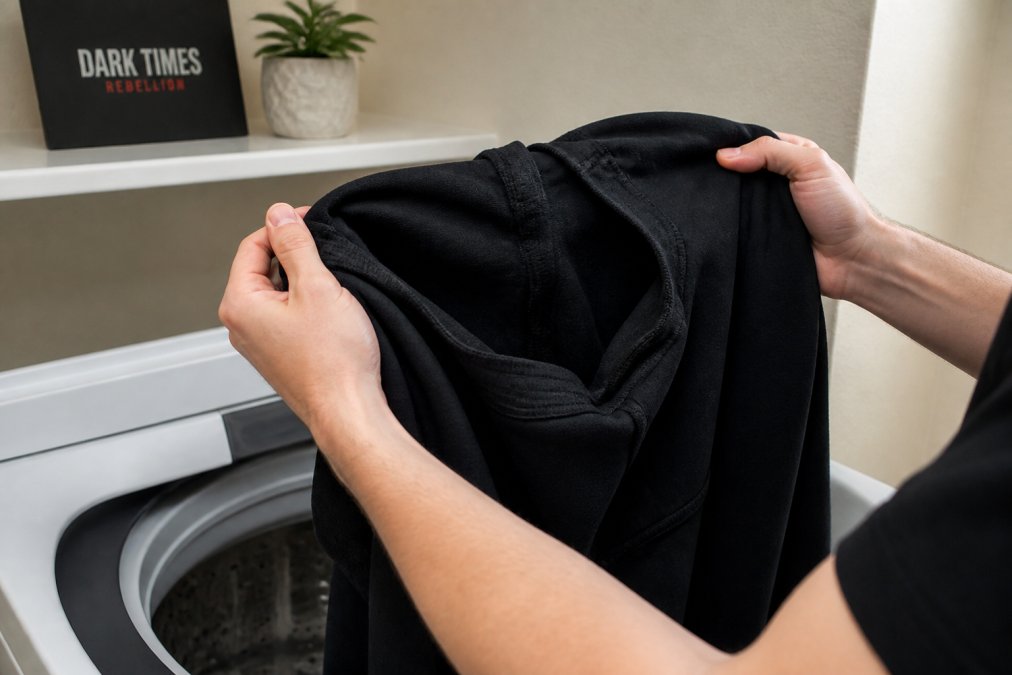
Step 2: Turn Your Shirt Inside Out
This single step protects both the fabric surface and any graphic prints.
Turning the shirt inside out keeps the printed side away from agitation and friction. Graphic prints fade from direct contact with water, detergent, and the washing machine drum. Inside-out washing extends print life significantly.
The fabric surface also benefits. The outside of the shirt experiences the most wear during washing. Inside-out positioning protects that surface from unnecessary friction.
This takes 5 seconds per shirt. Do it every single wash.
Step 3: Use Cold Water and Choose the Right Detergent
Cold water is non-negotiable. Hot or warm water damages heavyweight cotton.
Cold water prevents color fading by keeping dyes locked into the fabric. It also prevents shrinkage by keeping fibers relaxed. Most importantly, cold water washes effectively. Modern detergents work well in cold water. The myth that hot water cleans better is outdated.
Fill the washing machine with cold water. Set the temperature to cold or cool. Never use warm or hot water for heavyweight cotton.
Detergent choice matters as much as water temperature. Harsh detergents strip natural oils from cotton fibers, making them brittle and prone to fading. Mild detergent cleans effectively without damaging the fabric.
Look for detergents labeled "gentle" or "mild." Avoid detergents with heavy dyes, perfumes, or optical brighteners. These can stain or damage heavyweight cotton.
Martyr Heavyweight Christian Warrior →
Use less detergent than you think you need. Heavyweight cotton doesn't require much. A quarter cup of mild detergent cleans a full load. Excess detergent leaves residue that dulls the fabric and can cause irritation.
Never use bleach on heavyweight cotton. Bleach weakens fibers and causes permanent damage. It also strips color from dyed fabrics.
Fabric softener should be avoided. It coats the cotton fibers and reduces absorbency. Heavyweight cotton doesn't need softening. The fabric is naturally soft.
Step 4: Select Gentle Cycle Settings
The gentle cycle protects fabric integrity. Standard or heavy-duty cycles use aggressive agitation that stresses seams and fibers.
Set the washing machine to gentle cycle. This setting uses slower spin speeds and less agitation. The result is cleaner clothes with less wear.
Wash time should be 30-40 minutes on gentle cycle. This is enough time for detergent to lift dirt without excessive friction.
Spin speed matters. High spin speeds wring out water aggressively, which can damage seams and distort the garment shape. Gentle cycle uses lower spin speeds that remove water without stress.
Load size affects wash quality. Don't overstuff the machine. Heavyweight cotton needs room to move freely. A full load is fine, but crowded loads prevent proper cleaning and increase friction damage.
Use cold water with gentle cycle every time. This combination protects your investment.
Maintaining Graphic Print Quality on Shirts
Graphic prints fade from heat, light, and friction. Proper washing prevents this degradation.
Turning the shirt inside out during washing is the primary protection. The print never contacts the washing machine drum directly.
Avoid direct sunlight when drying. UV light fades prints over time. Air dry in shade or indoors when possible.
Never use a clothes dryer for graphic print shirts. Heat sets the fading process. Even low-heat settings can damage prints.
Iron graphic prints with caution. If you must iron, do it inside-out on low heat. Better yet, avoid ironing graphic prints altogether.
Store printed shirts away from direct light. A closet or dresser drawer protects prints from UV exposure.
Wash graphic print shirts less frequently than plain shirts. Every 3-4 wears instead of after every wear extends print life significantly. Spot-clean small stains between washes instead of full washing.
Cold water washing protects print dyes. The dyes stay locked in the fibers. Hot water opens the dyes and causes bleeding.
Air Drying vs Machine Drying Cotton Tees
Machine drying damages heavyweight cotton. Air drying preserves it.
Machine drying uses heat that shrinks fibers and weakens fabric structure. The tumbling action causes friction that fades colors and damages prints. Heat also sets wrinkles and can cause pilling on the fabric surface.
Air drying takes longer but produces superior results. The garment maintains its shape, size, and color. Fibers stay strong. Prints last longer.
Hang the shirt on a hanger or clothesline. Indoors is fine. A bathroom or laundry room works well. The shirt dries completely in 12-24 hours depending on humidity and air circulation.
Never use a clothes dryer for heavyweight cotton.
Storage and Long-Term Care for Heavyweight Cotton
How you store heavyweight cotton affects its lifespan. Proper storage prevents damage between wears.
Common Mistakes to Avoid When Washing Heavyweight Cotton
Most people damage their heavyweight cotton shirts through simple mistakes. Here's what to avoid.
Frequently Asked Questions
How do you wash 100% cotton so it doesn't shrink?
Wash heavyweight cotton in cold water on a gentle cycle, turn the shirt inside out before washing, and air dry instead of using a tumble dryer. Cold water prevents the cotton fibers from contracting, while the gentle cycle reduces agitation that can cause shrinkage. Avoid hot water and high heat drying, which are the primary causes of shrinkage in 100% cotton garments. Always check the care label for specific manufacturer recommendations.
Can you put 100% cotton t-shirts in the dryer?
Avoid tumble drying heavyweight cotton tees when possible. Machine drying applies intense heat that causes cotton fibers to shrink and can damage graphic prints. If you must use a dryer, select the lowest temperature setting and remove the shirt while still slightly damp. Air drying or line drying is the best method for preserving the garment's shape, color, and longevity. For premium pieces like Dark Times Rebellion's Martyr Heavyweight Tee, air drying protects your investment.
What is the best water temperature for washing heavy cotton?
Cold water (below 60°F) is ideal for washing heavyweight cotton tees. Cold water wash prevents color fading, reduces shrinkage risk, and protects graphic prints from cracking. Warm or hot water causes cotton fibers to relax and contract, leading to unwanted size changes. Cold water also uses less energy and is gentler on the fabric's integrity, making it the standard recommendation for maintaining quality apparel.
How do you prevent graphic prints from cracking on cotton tees?
Turn the shirt inside out before washing, use cold water, select a gentle cycle, and avoid tumble drying. These practices minimize friction and heat exposure that cause print cracking. Wash with mild detergent and skip fabric softeners, which can weaken the print bond. Air dry completely before wearing. For graphic-heavy pieces, washing less frequently (every 2-3 wears) also extends print life significantly.