

Table of Contents
- Why Heavyweight Fabric Lasts Longer
- Breathable Layering Techniques for Summer
- How to Style a Heavyweight Tee Without Overheating
- Step-by-Step: Layering a Heavyweight Shirt in Summer
- Balancing Silhouettes and Textures for Visual Weight
- Common Mistakes to Avoid When Layering Heavyweight Shirts in Summer
- Conclusion: Wear Your Conviction Without Compromise
- Frequently Asked Questions
Last Updated: September 16, 2026
Why Heavyweight Fabric Lasts Longer
Heavyweight cotton earns its keep through density, not marketing. A 6.1 oz/yd² garment-dyed tee holds its shape after repeated washing because the yarn is spun tighter and woven denser than the thin 4 oz shirts most brands push. That density is also the reason so many people assume heavyweight shirts summer wear is impossible. It isn't, but it requires a different approach than throwing on a light tee and hoping for the best.
Garment-Dyed Construction and Durability
Garment dyeing means the shirt is cut and sewn first, then dyed as a finished piece. This produces softer hand-feel from the first wear and deeper color saturation that resists fading. The Textile Exchange's materials guidance notes that dyeing method significantly affects a garment's longevity and water use.
Breathable Layering Techniques for Summer
Breathable layering for summer depends on three variables: fabric weight, weave openness, and how much air your outermost layer lets escape. Get those right and a heavyweight tee becomes wearable in heat that would soak through a cheap alternative.
Fabric Weight, Weave, and Ventilation
Fabric weight is measured in ounces per square yard. A 6.1 oz/yd² ring-spun cotton sits in the heavyweight category, while a standard tee runs closer to 4 oz. Ring-spun cotton creates a smoother, stronger yarn with fewer protruding fibers, which means less friction against skin and better moisture movement.
- Lighter inner layers move moisture away from skin
- Mid-layer heavyweight shirts provide structure and visual weight
- Open outer layers create a chimney effect that pulls heat upward and out
The Three Mechanisms That Actually Keep You Cool
Most guides stop at "wear breathable fabrics" and never explain why a denser weave can outperform a thinner one in heat. Three mechanisms do the work:
- Air permeability. Measured in cubic feet per minute (CFM) under a standard pressure differential, this is how much air passes through a fabric. A dense but loosely woven heavyweight cotton can move more air than a tightly knit lightweight jersey, because openness of the weave matters more than thickness of the yarn.
- Capillary wicking. Cotton fibers pull moisture along their surface through capillary action. The denser the yarn, the more continuous the capillary path, which is why a heavyweight ring-spun tee can move sweat to its outer surface faster than a thin, loosely spun shirt that saturates in place.
- Convective exchange. Air moving between layers carries heat away from the body. This is why an unbuttoned overshirt over a heavyweight tee outperforms a single heavyweight tee worn alone, the gap between layers becomes a convection channel.
Humidity Changes the Math
In high humidity, sweat evaporates more slowly, so wicking matters more than airflow alone. A heavyweight cotton shirt worn directly against skin in humid conditions absorbs sweat and holds it, because the fabric is doing the absorbing instead of the wicking. That is the single biggest reason heavyweight shirts get blamed for summer discomfort. The fix is a base layer that moves moisture into the heavyweight shirt's outer face, where air can reach it.
Heavyweight Fabric Care in Humidity
Most summer layering guides ignore maintenance entirely, and that is a mistake with heavyweight cotton. In humid conditions, a 6.1 oz/yd² shirt takes noticeably longer to dry than a 4 oz tee because the denser weave traps moisture between fibers. Two practical rules:
- Never leave a worn heavyweight shirt in a closed hamper. Hang it to dry within an hour of taking it off, even if you plan to wash it later.
- Wash less often, air more often. Heavyweight garment-dyed cotton tolerates multiple wears between washes if it is aired properly. Over-washing accelerates fiber breakdown and fading without improving odor control.
How to Style a Heavyweight Tee Without Overheating
Styling a heavyweight tee in heat comes down to silhouette and airflow, not fabric avoidance. A boxy oversized fit worn alone with shorts keeps air moving around your torso. Tuck the front hem slightly to define your waist and let the back drape loose for ventilation.
Visual Weight vs. Physical Weight
This is the distinction most guides skip, and it is the key to wearing a heavyweight look in real heat. Visual weight is how substantial a garment reads to the eye, its opacity, drape, and structure. Physical weight is what you actually carry on your body. They are not the same thing, and you can maximize one while minimizing the other.
- Opacity. A dense weave blocks light, so the shirt reads as solid and intentional rather than sheer.
- Drape. Heavier cotton falls in straighter lines instead of clinging, which creates the structured silhouette people associate with quality.
- Structure at the neck and shoulders. Twill-taped seams and a reinforced collar hold their shape, which signals weight even when the fabric itself is not heavy.
Styling Tricks That Create Perceived Weight
If you want the heavyweight look without committing to heavyweight fabric on the hottest days, these techniques do the work:
- Choose a darker tone for the top half. Dark colors absorb more heat, so use them on the layer that spends the most time in shade or indoors, and keep the outer layer light.
- Use a monochrome column. Dressing in one tone from shoulder to hem creates a continuous visual mass that reads as heavier than a high-contrast outfit.
- Anchor with structured footwear. A chunky sole or a leather boot adds visual weight at the bottom, which balances a lighter top half.
- Add one textural element. A ribbed collar, a heavy-gauge knit beanie, or a canvas bag introduces the tactile cue that people associate with heavyweight garments.
When to Wear the Real Thing
None of this replaces actual heavyweight cotton, it extends your options. On a mild summer evening, a 6.1 oz/yd² garment-dyed tee is the right call, because the fabric's opacity and drape do the work without any styling tricks. On a 95°F afternoon with high humidity, a lightweight cotton-linen shirt styled with the techniques above gets you the same silhouette with far less heat load.
Hope is Forged - Premium T-Shirt - Grey →
Step-by-Step: Layering a Heavyweight Shirt in Summer
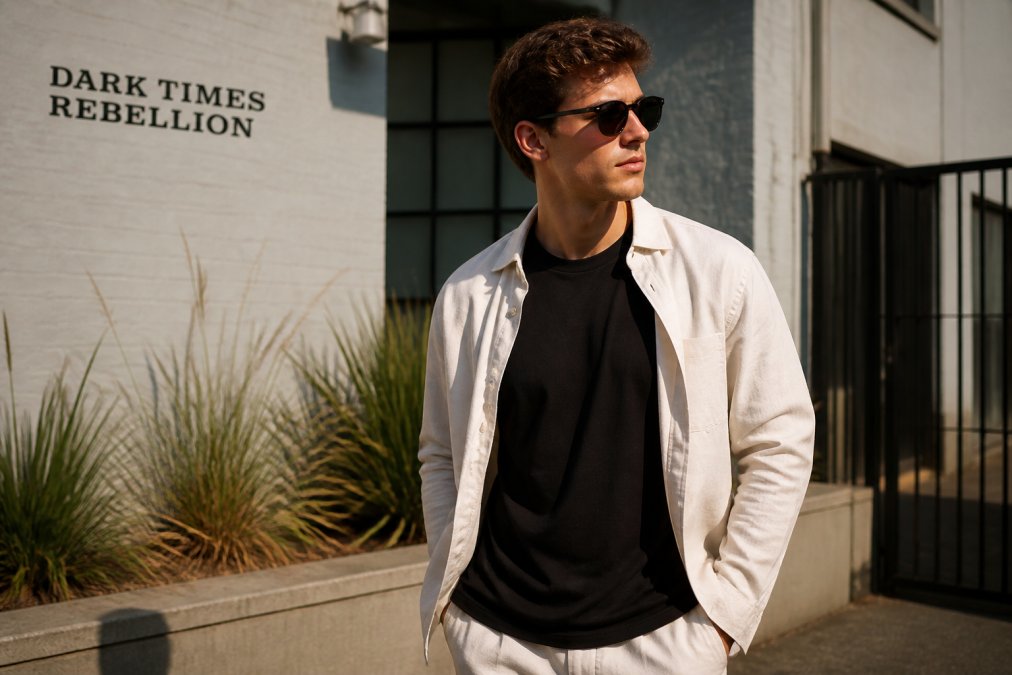
Layering a heavyweight shirt in summer follows a fixed order: moisture-wicking base, heavyweight mid-layer, open lightweight overshirt. Each layer has one job, and skipping any of them breaks the system.
Step 1: Start With a Moisture-Wicking Base Layer
Choose a thin performance tee or a lightweight cotton tank as your base layer. Its only job is moving sweat off your skin and into the fabric above it. Cotton jersey works if you're not moving much; a synthetic blend performs better if you're active. Keep it fitted, not tight.
Step 2: Add the Heavyweight Shirt as a Mid Layer
This is where the Martyr Heavyweight Christian Warrior T-Shirt does its work. The 6.1 oz/yd² ring-spun cotton gives the outfit structure, and the relaxed fit leaves room for air to move between the base layer and the shirt. Wear it untucked for maximum ventilation.

Step 3: Finish With an Open Lightweight Overshirt
An open linen or chambray overshirt adds visual depth without adding heat. Leave it unbuttoned so air moves freely between the heavyweight tee and the overshirt. Roll the sleeves once or twice for a smart-casual finish. This is the layer that turns a plain tee into a complete outfit.
Balancing Silhouettes and Textures for Visual Weight
Visual weight is not the same as physical weight. A heavyweight tee reads as substantial because of its drape and opacity, not because it's actually heavy on your body. Balance that visual mass with lighter elements below.
- Pair a boxy silhouette with slim or straight-leg pants
- Use textural contrast: smooth cotton against rough linen
- Keep your color palette to two or three tones
- Let the heavyweight piece anchor the outfit, not dominate it
Common Mistakes to Avoid When Layering Heavyweight Shirts in Summer
| Mistake | Fix | Impact |
|---|---|---|
| Tight base layer | Switch to a fitted moisture-wicking tee | Air circulates, sweat evaporates |
| Closed overshirt | Leave it unbuttoned | Heat escapes upward |
| Too many layers | Cap it at three | Reduces trapped heat |
| Dark colors head to toe | Add one light tone | Cuts heat absorption |
| Skipping the base layer | Always wear one | Prevents sweat soaking the heavyweight tee |
The Hope is Forged Premium T-Shirt in Grey works well as a mid-layer because the lighter grey tone reflects more heat than a black shirt while keeping the same 6.1 oz/yd² construction.

Conclusion: Wear Your Conviction Without Compromise
Summer heat is not a reason to abandon heavyweight clothing or the statement it makes. Layer correctly and you keep the structure, the durability, and the visual weight that make these pieces worth owning. For believers who treat their wardrobe as a quiet testimony, that matters.
Frequently Asked Questions
How do you layer heavyweight shirts without getting too hot?
Start with a moisture-wicking base layer to pull sweat away from your skin. Choose a heavyweight shirt made from breathable cotton, like a 6.1 oz/yd² ring-spun tee, and wear it as a mid layer. Top with an open lightweight overshirt for airflow. Keep the outer layer unbuttoned and roll sleeves where possible. This setup lets air circulate while the heavyweight fabric provides structure. Avoid tight base layers that trap heat, and opt for lighter colors that reflect sunlight.
What are the best breathable fabrics to pair with heavyweight cotton?
Linen, cotton-linen blends, and lightweight performance knits work best. Linen's natural fibers allow maximum airflow and wick moisture, while cotton jersey adds softness without bulk. For a base layer, choose a thin moisture-wicking synthetic or merino wool. Avoid heavy denim or polyester blends that trap heat. When layering, the goal is to combine a breathable inner layer with a structured heavyweight outer piece, so air moves freely between them.
Can you wear heavyweight shirts in high humidity?
Yes, if you manage the layers correctly. High humidity slows evaporation, so choose a base layer that wicks moisture quickly. Wear your heavyweight shirt unbuttoned or with an open overshirt to increase ventilation. Opt for lighter colors and avoid tight fits that restrict airflow. After wearing, hang the shirt to dry immediately to prevent mildew. Heavyweight cotton can handle humidity if you give it room to breathe and keep the rest of your outfit light.
How to style a heavyweight tee for a polished look?
Pair a heavyweight tee with tailored chinos or dark jeans and a lightweight blazer or overshirt. Tuck the front slightly to define your waist, or leave it untucked if the fit is relaxed. Add minimal accessories like a simple watch or leather bracelet. Choose a tee with a clean neckline and no loud graphics for a smarter vibe. Dark Times Rebellion's garment-dyed heavyweight tees offer a premium, structured look that elevates casual outfits.