

Table of Contents
- What Makes Heavyweight Fabric More Durable?
- Heavyweight Cotton GSM Explained: The Numbers That Matter
- Lightweight vs Heavyweight Fabric Durability: A Direct Comparison
- How to Care for Heavyweight Cotton to Maximize Its Lifespan
- The Environmental Case for Buying Heavyweight Fabric
- How Heavyweight Fabric Feels: Tactile Experience Across Skin Types
- Conclusion
- Frequently Asked Questions
Last Updated: September 27, 2026
What Makes Heavyweight Fabric More Durable?
Heavyweight fabric lasts longer because its higher fiber density creates more material per square inch to absorb friction, tension, and repeated washing. At Dark Times Rebellion, we build every piece from premium heavyweight cotton for exactly this reason: a garment that survives daily wear keeps carrying your message.
Fiber Density and Structural Integrity
Fiber density is how tightly cotton fibers are packed into a given area of woven cloth. Higher density means greater structural integrity: the weave resists gaps, pulls, and thinning longer.
Three factors drive that density:
- Yarn thickness: Heavier yarns use more cotton per thread, so the finished weave holds more mass
- Weave tightness: A tighter interlacing pattern locks fibers in place and reduces slippage under load
- Fiber quality: Longer staple fibers spin into stronger yarns with fewer weak points along the thread
Heavyweight Cotton GSM Explained: The Numbers That Matter
GSM stands for grams per square meter, the standard measurement of fabric weight. A higher GSM means more material per unit of area, the most reliable predictor of how a garment holds up.
| GSM Range | Weight Class | Typical Use | Durability Outlook |
|---|---|---|---|
| 120-160 GSM | Lightweight | Summer tees, undershirts | Thins quickly, prone to holes |
| 160-200 GSM | Midweight | Standard retail tees | Moderate lifespan |
| 200-250 GSM | Heavyweight | Premium tees, workwear | Long lifespan, resists distortion |
| 250+ GSM | Ultra-heavyweight | Outerwear, hoodies | Very long lifespan, slow to break in |
What Different GSM Ranges Mean for Longevity
The jump from 160 to 220 GSM is roughly a 37% increase in material per square meter, and that extra mass absorbs abrasion instead of letting it tear through the weave.
Lightweight vs Heavyweight Fabric Durability: A Direct Comparison
The lightweight vs heavyweight fabric durability question comes down to load distribution and abrasion resistance. A lightweight shirt concentrates stress on fewer fibers and fails sooner at the collar, shoulders, and hem; a heavyweight shirt spreads that stress across more material.
| Factor | Lightweight Fabric | Heavyweight Fabric |
|---|---|---|
| Tensile strength | Lower, tears under load | Higher, resists pulling |
| Abrasion resistance | Wears through at friction points | Handles repeated friction |
| Shape retention | Stretches and sags | Holds original silhouette |
| Shrinkage risk | Higher after washing | Lower, more stable |
| Pilling | Common on low-quality fibers | Rare with ring-spun cotton |
| Lifespan | One to two seasons | Several years |
How to Care for Heavyweight Cotton to Maximize Its Lifespan
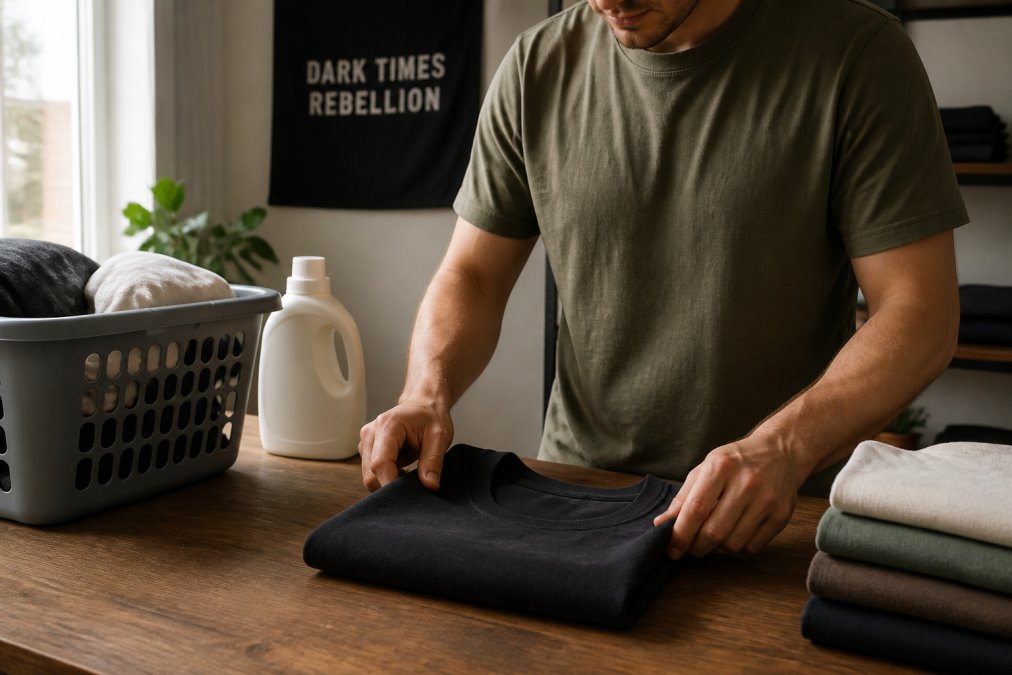
Learning how to care for heavyweight cotton is the difference between a shirt that lasts three years and one that lasts ten. The fabric is built to endure; poor washing habits cut that lifespan short.
Washing, Drying, and Storage Tips
- Wash in cold water on a normal cycle to limit fiber stress and reduce shrinkage
- Turn garments inside out before washing to protect any printed or embroidered design
- Use a mild detergent and skip fabric softener, which coats fibers and reduces breathability
- Tumble dry on low or hang dry; high heat is the fastest way to cause distortion
- Fold rather than hang heavy pieces, since hangers stretch the shoulders over time
- Store in a cool, dry place away from direct sunlight to prevent fiber degradation
The single biggest mistake is overdrying. Heat breaks down cotton fibers and accelerates pilling, especially at the underarms and collar. Pull the shirt out while slightly damp and let it finish air-drying flat.
The Environmental Case for Buying Heavyweight Fabric
Buying fewer, heavier garments is one of the most direct ways to reduce your wardrobe's environmental footprint, but the argument only holds up if you understand where the impact actually sits.
Durability as Slow Fashion
The core idea behind slow fashion is simple: a garment's environmental cost is front-loaded. Growing the cotton, spinning, dyeing, cutting, sewing, and shipping all happen before the first wear, and every step carries water, energy, and raw material demand. When a shirt lasts one season, that cost is amortized over a few months; when it lasts five years, it spreads across dozens of times more wears.
Where the Trade-Offs Live
Durability is not automatically the lowest-impact choice.
Martyr Heavyweight Christian Warrior →
- More material per garment: A 220 GSM tee uses meaningfully more cotton than a 150 GSM tee. If both are worn the same number of times, the heavier one carries a higher upfront footprint. The environmental win only appears when the heavier garment is actually worn longer, which is why care matters as much as construction.
- Fiber choice matters as much as weight: 100% cotton is biodegradable and can be mechanically recycled, though recycling infrastructure for textiles is still limited. Cotton-poly blends are harder to recycle because separating the fibers is difficult, so a durable blend can still end up in a landfill.
- Synthetic heavyweights shed microfibers: Fleece-backed polyester and other synthetic heavyweights resist abrasion but release microfibers in the wash. That is a real environmental cost that a GSM number does not capture.
- Washing is a major share of lifetime impact: How you launder a garment often matters more than how it was made. Cold water, less frequent washing, and air drying cut the energy and water tied to the use phase substantially. A heavyweight tee washed cold and hung dry has a far lower lifetime footprint than the same tee washed hot and tumble dried weekly.
Why This Connects to Values
A garment built to last reflects a commitment to stewardship, and that fits a life oriented around purpose rather than disposability. The environmental and values cases point the same direction: buy deliberately, wear it out, replace it rarely.
How Heavyweight Fabric Feels: Tactile Experience Across Skin Types
Heavyweight fabric feels substantial, smooth, and slightly cooler at first contact than lightweight cotton, then warms to body temperature and holds it. But "heavyweight" describes weight, not fiber: two shirts at the same GSM can feel completely different against the skin depending on composition, which also decides how long each lasts.
Fiber Composition Changes Both Feel and Lifespan
100% ring-spun cotton is the benchmark for heavyweight tees. Ring spinning aligns and smooths the fibers, so the yarn surface has fewer protruding ends, meaning less friction against skin and better tolerance for sensitive skin. It also pills less, because fewer loose fiber ends tangle at the underarms and collar.
Matching Fabric to Skin Type and Climate
- Sensitive skin: Ring-spun 100% cotton in the 200-220 GSM range is the safest default. Smooth yarn, no synthetic friction, breathable.
- Warm climates: A 200-220 GSM ring-spun tee is wearable year-round in most conditions, though it holds heat longer than a lightweight tee. A looser weave breathes better than a tight one at the same weight.
- Cooler climates: The extra mass provides meaningful thermal regulation as a base layer, and cotton's moisture absorption keeps skin drier than a synthetic base layer at rest.
- Active wear: Breathability depends on weave construction. A tight weave traps more heat during exertion, so a heavyweight tee is a poor choice for high-sweat activity regardless of fiber.
The Roughness-to-Softness Trade-Off
New heavyweight cotton often feels slightly stiff out of the bag. That is not a defect: the sizing and finish wash out over the first few cycles, and the fabric softens as fibers relax. A shirt that feels board-stiff on day one often becomes the softest piece in the drawer by month three. You accept a short break-in period in exchange for years of shape retention, whereas a lightweight tee feels soft immediately and stays soft until it thins out and fails.
Conclusion
Heavyweight fabric lasts longer because density, weave construction, and fiber quality combine to distribute stress instead of concentrating it: more material, better load sharing, slower failure. Care for it with cold washes and low heat, and one heavyweight piece can outlast a stack of lightweight replacements.
Frequently Asked Questions
What type of fabric lasts the longest?
Heavyweight cotton, particularly 100% ring-spun cotton in the 6 oz/yd² (200+ GSM) range, consistently outlasts lighter fabrics. Its higher fiber density and tighter weave resist abrasion and shape loss better than synthetics or lightweight blends. Garment-dyed heavyweight cotton, like the Martyr Tee from Dark Times Rebellion, holds up through repeated washing because the dye penetrates the fibers rather than sitting on the surface.
Is 100% heavyweight cotton more durable than synthetic blends?
Yes, for most daily-wear applications. Heavyweight cotton's natural fibers create a denser structure that resists pilling and tearing. Synthetic blends may offer stretch or moisture-wicking, but they often degrade faster under friction and heat. The 6.1 oz/yd² ring-spun cotton in Dark Times Rebellion's heavyweight shirts is built for longevity without relying on plastic-based fibers that break down over time.
How does fabric weight (GSM) impact the lifespan of a t-shirt?
GSM (grams per square meter) measures fabric density. Heavier fabrics, typically 200 GSM and above, have more fibers per square inch, which means more material to withstand friction and stretching. A 6.1 oz/yd² (206.8 g/m²) shirt like the Martyr Tee will outlast a standard 4 oz/yd² tee because the extra density prevents thin spots, holes, and seam failure.
Why do heavyweight shirts hold their shape better over time?
Heavyweight fabric resists distortion because the denser weave distributes stress more evenly across the garment. When you pull a lightweight shirt over your head or wash it repeatedly, the thinner fibers stretch and lose recovery. A 6.1 oz/yd² garment-dyed cotton shirt maintains its structure because the fabric has enough body to bounce back, especially with twill-taped neck and shoulder seams that prevent stretching at high-stress points.
Cheap apparel fails because it was never built to carry weight, whether that weight is physical or spiritual. Dark Times Rebellion makes premium heavyweight pieces for believers who intend to stand firm for the long haul, with durable construction, purpose-driven design, and a 5.00 star rating from customers who wear their faith openly. Enter the Rebellion and put on something built to last.